

Lucas had always been the kind of man who measured his life in calendars. As a senior logistics coordinator for a shipping firm in Seattle, his days were a blur of spreadsheets, deadlines, and the relentless, gray drizzle of the Pacific Northwest. At forty-two, Lucas felt like a man who had been running a marathon for twenty years, only to realize he had forgotten where the finish line was.
The burnout didn’t hit him all at once. It was a slow erosion, like water wearing down stone. It started with the insomnia, then the irritability, and finally, a profound sense of hollowness that no amount of overtime pay could fill. So, Lucas did the only thing he could think of: he took a sabbatical. He packed a duffel bag, left his laptop in the bottom drawer of his desk, and drove three hours east to a small, rented cabin near the source of the Skykomish River.
The cabin was rustic, smelling of pine needles and old wood. It sat on the edge of a dense forest, far from the hum of the highway. For the first three days, Lucas did nothing. He slept for fourteen hours at a time. He stared at the ceiling. He felt guilty for not being productive, a phantom vibration in his pocket where his phone used to be.
On the fourth morning, the guilt finally gave way to curiosity. Lucas pulled on his hiking boots and walked down the muddy bank toward the water.
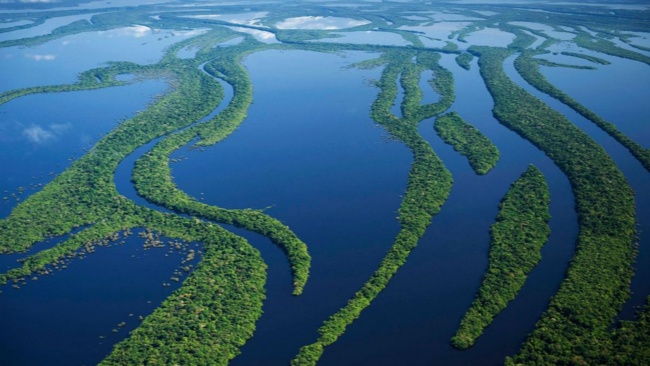
The river was wide here, fed by the melting snow of the Cascades. It was crystal clear, rushing over smooth, multicolored stones with a sound that was both chaotic and deeply rhythmic. Lucas sat on a large, flat boulder, watching the water churn. He watched a single maple leaf detach from an overhanging branch and land on the surface.
He watched it float. It bobbed over a small rapid, spun in a gentle eddy, and then continued its journey downstream. Lucas followed it with his eyes until it disappeared around a bend, heading west, toward the ocean.
“Going somewhere?”
Lucas jumped. He hadn’t heard anyone approach. Standing a few feet away was an older woman with silver hair tied back in a messy bun. She wore a thick wool sweater and held a mug of steaming tea. This was Eleanor, his landlord, who lived in the main house up the hill.
“Just watching the leaf,” Lucas said, feeling slightly foolish.
Eleanor nodded, stepping closer to the water’s edge. “It’s in a hurry, isn’t it? That leaf. It thinks if it doesn’t get to the sea by Tuesday, it’s failed.”
Lucas chuckled dryly. “Something like that.”
“I call this stretch ‘The Stubborn Bend,'” Eleanor said, gesturing to the curve in the river where the water slowed significantly. “See how it pools here? The water lingers. It doesn’t want to rush down to the ocean just yet. It wants to stay here, in the mountains, where the air is cool and the trees are tall.”
Lucas looked at the water. It did seem to hesitate, swirling in a complex, beautiful dance before surrendering to the current.
“My husband, Arthur, he was like this river,” Eleanor said softly, her eyes fixed on the flow. “He was a teacher. Spent forty years in the same classroom. Everyone told him he should have been a principal, or moved to the city, or written a book. They said he was wasting his potential by staying in one place.”
She took a sip of her tea. “But Arthur loved the staying. He loved knowing the names of the trees, the history of the soil, the way the light hit the chalkboard in October. He didn’t want to be the ocean. He was happy being the bend.”
Lucas looked at the older woman, really looked at her, and saw a profound peace in her wrinkles. “Did he regret it? Not going further?”
Eleanor smiled, and it was a smile that held no sadness, only warmth. “Oh, no. He used to say that the ocean is vast, yes, but it’s also lonely. It’s just salt and depth. But the river? The river touches the land. It feeds the roots. It reflects the sky. You don’t have to reach the end to be whole, Lucas. You just have to be present in the flow.”
She turned to leave, walking back up the path toward the cabin. “Don’t let the current push you if you want to rest,” she called back. “The sea will wait.”
Lucas sat alone on the boulder for a long time after she left. The sun began to dip below the tree line, casting long, golden shadows across the water. The air grew crisp, carrying the scent of damp earth and fir.
He looked at the water again. For the first time in years, he didn’t think about the next task, the next quarter, or the next milestone. He didn’t worry about where he was going. He simply watched the water swirl in the stubborn bend, holding its ground, beautiful and complete in its hesitation.
He took a deep breath, filling his lungs with the cold mountain air, and for the first time in a decade, Lucas didn’t feel like he was falling behind. He felt like he had finally arrived.