

The rain in Seattle didn’t wash things clean; it just made the grime slicker. James wiped his muddy hands on his jeans and stared at the object sitting on his workbench. It was a men’s oxford shoe, vintage, high quality, but ruined by a week in the Puget Sound.
James was a cobbler, a trade he’d inherited from his father, though he lacked the old man’s patience. Business was slow. The world preferred to throw away broken things rather than fix them, and James was barely keeping the lights on in his basement shop.
The shoe had been dropped off by a nervous man in a trench coat three days ago. “Resole it,” the man had said, his voice trembling. “And hurry.” He hadn’t left a name, just a ticket number: 409.
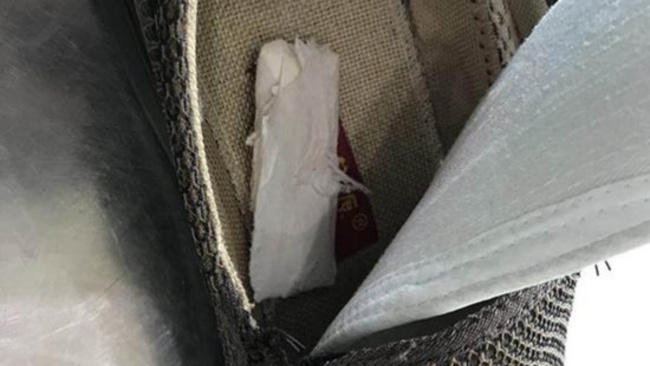
James picked up his awl. The sole was peeling away from the heel, waterlogged and heavy. As he pried the rubber back, something crinkled. It wasn’t leather or glue. It was plastic.
With a frown, James used his tweezers to fish out a small, waterproof pouch that had been wedged into the hollow of the heel. Inside was a bank book. Not a modern debit card, but an old-fashioned, paper passbook from a local credit union, dated fifteen years ago.
Curiosity, that fatal flaw of the bored, took over. James flipped it open.
The balance was staggering. Enough to pay his rent for five years. Enough to fix the leak in his roof. Enough to disappear.
His heart hammered against his ribs. He looked around the empty shop. The nervous man. The rush job. It wasn’t about the shoe; it was about the transport. Someone had used this cobbler shop as a dead drop, or perhaps the man had panicked and tried to retrieve it, only to realize he’d lost the ticket.
James looked at the clock. 5:55 PM. He closed the shop early, locking the door and flipping the sign toClosed. He sat in the dark, the passbook glowing under the single bulb of his workbench.
He thought about his debts. He thought about the eviction notice tucked into his mailbox. He thought about how easy it would be to walk into that credit union, claim he found it, or forge a story. Who would know? The man in the trench coat didn’t know his name.
But then he looked at the shoe. It was a good shoe. Hand-stitched. Someone had loved this shoe once.
The bell above the door jingled, sharp and violent. James jumped, knocking the passbook onto the floor.
The door burst open. It was the man. He looked worse than before—soaked, eyes wide, hair plastered to his forehead.
“Ticket 409,” the man gasped, leaning against the doorframe. “Did you… did you fix it?”
James didn’t move. He kept his foot planted firmly on the passbook hidden beneath the workbench. “It’s not ready,” James said, his voice surprisingly steady. “The glue needs time to set.”
The man stepped forward, desperation radiating off him. “I don’t care about the glue. I just need the shoe. Now. I’ll pay double.”
“Why?” James asked. “It’s just a shoe.”
The man froze. He looked at James, really looked at him, for the first time. He saw the tired eyes, the worn apron, the poverty of the shop. He saw a man who understood the value of things that were broken.
“It’s not just a shoe,” the man whispered. “It’s my daughter’s college fund. I… I lost my job. I was trying to hide it from my wife until I found work. I put it in the heel so I wouldn’t spend it. But I lost the ticket, and I thought it was gone forever.”
It was a lie. James could smell the lie. It smelled like ozone and fear. This wasn’t a worried father; this was a man running from something dangerous.
James slowly lifted his foot. The passbook lay there on the concrete floor.
The man’s eyes locked onto it. He lunged.
James kicked the book under the heavy cast-iron sewing machine. “Get out,” James said.
“I need that!” the man screamed, reaching over the counter.
“And I need to keep my shop open,” James replied, grabbing his heavy hammer. “But I’m not selling my soul for it. That money isn’t yours. Not really. If it was for your daughter, you wouldn’t be here, shaking like a leaf, smelling like cheap whiskey and fear.”
The man stopped. He looked at the hammer, then at the dark space under the machine. He looked at James, seeing a resolve he hadn’t expected.
Slowly, the tension drained from the man’s shoulders. He straightened his coat. “You’re a fool,” he spat. “You could have been rich.”
“I’m a cobbler,” James said. “I fix things. I don’t steal them.”
The man turned and walked out into the rain. He didn’t run. He just walked, disappearing into the gray Seattle evening.
James waited ten minutes before he moved. He retrieved the passbook. He didn’t keep it. He drove to the address printed on the cover—a small branch in Ballard. He handed it to the teller, telling her he’d found it in a pair of donated shoes. He didn’t give his name.
Walking back to his car, the rain felt different. It still washed the grime, but for the first time in months, James felt like he was standing on solid ground. He didn’t have the money, but he had something heavier, something that anchored him to the earth. He had his name.
And in a city that washed everything away, keeping your name was the only victory that mattered.