
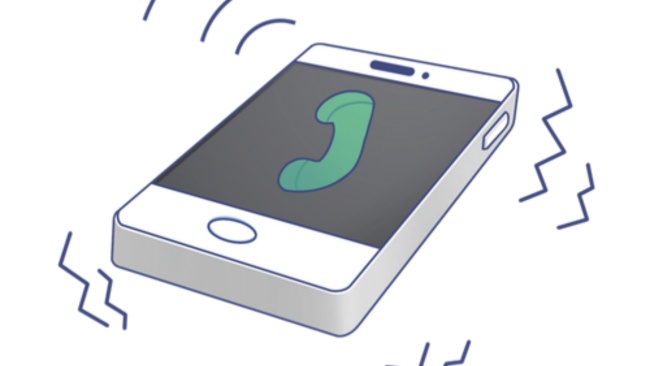

The vibration was always the same. A sharp, angry buzz against the mahogany nightstand.Bzzzt. Bzzzt.
James rolled over, blinking against the harsh glow of the digital clock: 3:00 AM.
It had been happening for seven nights. The phone sat on the table, a sleek black rectangle of glass and aluminum, completely disconnected from any cellular network. The SIM card had been removed months ago. It wasn’t even plugged into a charger.
Yet, every night at 3:00 AM, it vibrated.
James sat up, the sheets pooling around his waist. The silence in the apartment was heavy, the kind of silence that presses against your eardrums. He reached out, his hand trembling slightly, and touched the cold screen.
Nothing. No light. No notification. Just the fading echo of a phantom motor.
“It’s a glitch,” he whispered to the empty room. “Just a battery short.”
But he knew that wasn’t true. He had taken the battery out yesterday. He had physically removed the power source, placed it on the kitchen counter, and left the hollowed-out shell on the nightstand.
Bzzzt. Bzzzt.
The sound came from the shell. The hollow, battery-less shell.
James scrambled back, his heart hammering against his ribs like a trapped bird. He grabbed the lamp, holding it like a club, staring at the device. It lay there, innocent and inert.
He didn’t sleep the rest of the night.
The next day, James called in sick to the firm. He couldn’t focus on the merger spreadsheets; all he could think about was the vibration. He spent the afternoon at a hardware store, buying a hammer, a heavy-duty trash bag, and a roll of duct tape.
He wasn’t a superstitious man. He was a junior partner at a logistics company. He dealt in facts, in supply chains, in tangible realities. But the logic of the world had fractured, and he needed to seal the crack.
When he returned to his apartment, the sun was setting, casting long, bruised shadows across the floorboards. He picked up the phone. It felt lighter now, empty without its core.
He placed it inside the trash bag. He wrapped the bag tight, sealing it with layers of silver duct tape until it was a solid, unrecognizable brick. Then, he placed the brick into a metal shoebox, and taped that shut too.
He took the box to the dumpster in the alleyway behind his building. He buried it beneath bags of coffee grounds and rotting vegetables.
“Done,” he said, wiping his hands on his jeans.
He went inside, locked the door, and poured himself a whiskey. He sat on the sofa, watching the streetlights flicker on outside. He felt foolish. He felt relieved.
At 2:55 AM, James was asleep.
At 3:00 AM, he woke up.
Bzzzt. Bzzzt.
The sound wasn’t coming from the nightstand. It was coming from the wall.
James froze. The sound was muffled, distant, but unmistakable. It was the specific, rhythmic pulse of his phone. But the phone was in the dumpster. He had watched it fall. He had heard the thud.
He got out of bed, his bare feet cold on the floor. He walked to the bedroom wall, the one that shared a border with the alleyway. He pressed his ear against the cold plaster.
Bzzzt. Bzzzt.
It was louder here.
Then, he heard something else. A scratching sound. Like fingernails dragging against the other side of the drywall. Or perhaps… from theinside of the wall.
James backed away, his breath coming in short gasps. He grabbed his keys and ran out of the apartment. He didn’t stop until he was in a 24-hour diner three blocks away, surrounded by the clatter of silverware and the smell of burnt coffee.
He stayed there until sunrise.
The following morning, James hired a contractor. He told the man there was a rat in the wall, a big one, making scratching noises. He needed the drywall opened.
The contractor, a burly man named Miller, nodded and set up his drop cloths. James stood in the hallway, arms crossed, watching.
Miller cut a neat square into the plaster. Dust motes danced in the light.
“Let’s see what we got here,” Miller muttered, shining a flashlight into the cavity.
James leaned in, expecting to see insulation, copper wiring, maybe a dead rat.
Instead, he saw a small, hollow space between the studs. And sitting on a small wooden shelf that hadn’t been there before—a shelf that defied the blueprints of the building—was the phone.
It wasn’t wrapped in trash bags. It wasn’t in a shoebox. It was pristine. The screen was dark.
“How…” James started, but his voice failed him.
Miller frowned, reaching in. “Weird. Looks like someone left a phone in the wall during construction. But this model… this is brand new.”
Miller pulled the phone out and handed it to James. “You want me to patch this up?”
James took the phone. It was cold. “Yes. Please. Seal it tight.”
As soon as Miller turned his back to mix the spackle, the phone in James’s hand vibrated.
Bzzzt. Bzzzt.
James looked down. The screen lit up. There was no carrier signal. No Wi-Fi. But there was a notification. A single text message from an unknown sender.
He unlocked the phone. His fingers felt numb.
The message read: “I’m still hungry.”
James dropped the phone. It hit the floor with a crack, the screen shattering into a spiderweb of glass. But the light didn’t go out. The text remained, glowing brightly from the broken shards.
He looked at Miller, who was humming a tune, smoothing the wet plaster over the hole in the wall. Miller hadn’t heard the vibration. He hadn’t seen the light.
James realized then that the phone wasn’t haunted. It wasn’t a glitch.
It was a tether.
He picked up the broken pieces. He couldn’t throw them away. He knew, with a terrifying certainty, that if he threw them away, they would just come back. Closer next time. Maybe in his pocket. Maybe under his pillow.
He put the shards in his pocket and walked out of the apartment. He didn’t know where he was going, but he knew he couldn’t stay.
The phone buzzed against his thigh, a steady, rhythmic pulse, like a second heartbeat.
Reflection:
Sometimes, the things we try to discard don’t disappear; they just wait for us to turn our backs. We think we can bury our pasts, our mistakes, or our fears in the dark, but silence is not the same as absence.