

The rain in Seattle didn’t wash things clean; it just made the grime slicker. James pulled his coat tighter, the damp chill seeping into his bones. At thirty-four, he felt like he was running a race where the finish line kept moving further away. His phone buzzed in his pocket—another email from his boss, another deadline, another demand for his time. He ignored it.
He ducked into “Miller’s Antiques,” a narrow shop squeezed between a Starbucks and a dry cleaner, solely to escape the downpour. The air inside smelled of old paper, beeswax, and silence. It was a stark contrast to the chaotic hum of the city outside.
“Be with you in a moment,” a voice croaked from the back.
James nodded, shaking the water from his umbrella. He wandered aimlessly down the aisles, his eyes glazing over rows of porcelain dolls and tarnished silverware. He wasn’t looking for anything. He never was. He was just waiting for the rain to stop so he could go back to his life of spreadsheets and subway delays.
Then, something caught the corner of his eye.
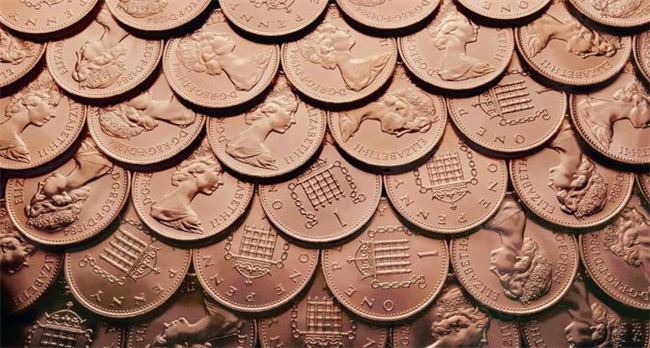
It wasn’t the grand grandfather clock ticking in the corner, nor the velvet painting of a sad clown. It was a small, wooden tray near the register, filled with loose change. Among the shiny quarters and dull nickels lay a single penny. It was an ugly thing, really. The copper was oxidized to a crusty green-brown, the date barely legible under a layer of century-old grime. It looked exhausted.
James reached out and picked it up. It was surprisingly heavy.
“Found something interesting?”
James jumped slightly. An elderly man stood behind the counter, polishing a pair of spectacles. He wore a tweed vest that had seen better decades.
“Just this,” James said, holding up the penny. “It’s practically falling apart. Why do you even keep it?”
The old man, Mr. Miller, smiled. His eyes were milky but sharp. “That’s a 1943 steel penny. Well, itshould be steel. That one looks like it went through a war and decided to keep going anyway. People usually overlook the damaged ones. They want the shiny proof sets. But the damaged ones… they have stories.”
James rubbed his thumb over the rough surface. “It’s just a cent. It can’t buy anything anymore.”
“Value isn’t always about what it can buy, son,” Mr. Miller said softly. “Sometimes, it’s about what it survived.”
James looked down at the coin. He thought about his own week. The project that had failed. The argument with his sister. The feeling that he was slowly eroding, losing his shine, becoming something discarded and useless. He felt a strange kinship with that oxidized disk.
“How much?” James asked.
“It’s been in that tray for six years,” Mr. Miller shrugged. “Nobody wants it. You can have it for a dollar. Consider it a donation to the rain fund.”
James handed over a bill. He didn’t know why he bought it. He didn’t collect coins. But as he walked back out into the rain, he kept the penny in his palm, closing his fingers around its rough edges.
That night, James sat at his kitchen table. The city lights blurred through the window. He placed the penny on the table and stared at it. He took a soft cloth and began to rub it. He didn’t try to make it look new—he knew that was impossible. He just wanted to see the date clearly.
As he rubbed, the green crust gave way to a dull, stubborn gray.1943. A year the world was on fire. This little piece of metal had been minted when men were dying on beaches thousands of miles away. It had been spent on a loaf of bread, or a newspaper, or a candy bar. It had passed through the hands of a grandmother, a soldier, a thief, a child. It had been dropped in mud, kicked into gutters, and forgotten in jars.
And yet, it was still here.
It wasn’t perfect. It was scarred and stained. But it was real.
James stopped rubbing. He looked at his own reflection in the dark window. He looked tired, yes. But he was still here, too.
He realized he had been measuring his worth by how shiny he appeared to others—his job title, his salary, his polished exterior. But maybe, just maybe, worth was also about endurance. It was about carrying the marks of where you’d been and still having weight.
He picked up the penny and placed it on his windowsill, right next to a small succulent that was struggling to grow. It didn’t look like trash anymore. It looked like an anchor.
The rain continued to fall outside, tapping against the glass. But for the first time in months, James didn’t feel the need to rush. He sat there, watching the water run down the pane, feeling the quiet weight of the coin in his pocket, and for a moment, the noise in his head finally stopped.
Subtle Reflection:
We often fear that our scars and weariness make us less valuable, like currency that has lost its luster. But perhaps, true value isn’t found in remaining pristine, but in the quiet dignity of having endured.