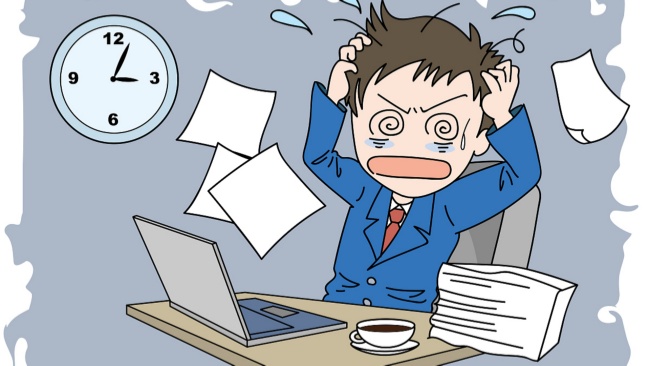



Maya checked her phone for the third time since lunch. She had sent a message to her coworker, Jen, that morning asking if she wanted to grab coffee later. The message showed as delivered. No reply yet.
By 2 p.m., Maya had reviewed the message at least a dozen times. Was the exclamation point too much? Did she sound needy? Maybe Jen was busy, but maybe she was also annoyed. At the office kitchen, Maya saw Jen talking with two other colleagues. She didn’t walk over. Instead, she spent the rest of the afternoon replaying their last conversation, scanning for signs she had said something wrong.
That evening, Jen replied: “Sorry, crazy day! Coffee tomorrow?”
Maya felt relief wash over her, followed immediately by a familiar frustration. She had spent almost six hours worrying about a message that required no worry at all. And this wasn’t the first time. Last week, it was a pause in a meeting that made her think her idea was stupid. The week before, it was a friend who didn’t laugh at her joke. Each time, her mind built an elaborate story from a few thin details, and each time, the story turned out to be wrong.
(Note: This story is a fictional case, used only to illustrate a psychological scenario.)
What’s Really Happening When You Replay a Conversation
Maya’s real problem wasn’t Jen, the message, or even the pause at the office. Her real problem was uncertainty — and what her mind did with it.
Social situations are full of gaps. A delayed reply, a flat tone, a half-smile that ends too quickly. Our brains are wired to fill in those gaps quickly, often with the most threatening explanation available. If a friend seems distant, we don’t assume they’re tired or distracted. We assume we did something wrong.
This is what people mean when they talk about overthinking social interactions. It’s not just thinking a lot. It’s thinking in circles, without new information, while your anxiety quietly grows. The more you replay the moment, the more certain you feel that something is wrong — even though nothing has actually changed.
Many people experience this. It doesn’t mean you’re fragile or socially incompetent. It usually means you care about connection and your mind is trying hard to protect it. But the protection comes at a cost: you end up exhausted by conversations that already ended.
Why Your Brain Won’t Let It Go
Your brain is not trying to torture you. It’s trying to keep you safe.
When you sense a possible social threat — rejection, judgment, embarrassment — your mind treats it like a problem that needs solving. So it searches for clues. It re-reads messages. It replays conversations. It imagines what others might be thinking. This is the brain’s way of trying to gain control over something uncertain.
The trouble is that social situations rarely offer clear answers. You can’t see inside someone’s head. So your mind keeps searching, and the searching itself starts to feel like evidence that something is wrong. This is sometimes called excessive self-monitoring — constantly watching yourself from the outside, grading every word and gesture.
Over time, this creates a kind of social exhaustion. You leave interactions feeling drained not because anything bad happened, but because you spent the entire time managing your own performance and reading everyone else’s reactions.
The good news is that this pattern can change. Not by forcing yourself to stop caring, but by giving your mind something more useful to do.
Three Practical Ways to Break the Loop
1. Separate the fact from the story
Overthinking thrives on blurring the line between what happened and what you think it means. A coworker didn’t reply — that’s a fact. She’s annoyed with me — that’s a story. Try writing down the situation in two columns: what you actually observed, and what you assumed. You don’t need to convince yourself the story is wrong. You just need to see that it is a story, not a fact. This small step creates breathing room between you and your anxiety.
2. Set a limit on replaying
You can’t always stop your mind from revisiting a moment, but you can decide how long you stay there. Give yourself a short window — say, five minutes — to review the situation once. Then move on deliberately. If your mind circles back later, remind yourself: “I already looked at this. Nothing new has changed.” It may feel uncomfortable at first, but over time, your brain learns that not every uncertain moment requires hours of analysis.
3. Test one assumption in real life
Instead of trying to think your way out of the worry, take one small action that gives you real information. If you’re worried a friend is upset with you, ask a simple question: “Hey, are we good?” If you’re unsure whether a comment landed badly, you can say, “I hope that came out the way I meant it.” You’re not seeking constant reassurance — you’re replacing guesses with actual data. Most of the time, the answer is far more ordinary than the story your mind built.
A Kinder Way to Move Forward
Overthinking social interactions is a common habit, not a personal failing. It usually comes from caring about people and wanting to get things right. But the pressure you feel often comes less from what happened and more from how you interpret it.
You don’t need to overhaul your personality or become someone who never worries. You just need to interrupt the loop a little earlier each time. Separate fact from story. Limit the replay. Test one assumption instead of building ten. These are small moves, but they add up.
And on the days when you still spend an hour replaying a conversation — that’s okay too. Notice it, gently redirect yourself, and move on. The goal isn’t perfection. It’s a little more peace in your everyday interactions.
FAQ
Why do I overthink social interactions so much?
Overthinking often comes from a mix of caring about connection and disliking uncertainty. Your brain treats unclear social signals as potential threats and tries to solve them by replaying and analyzing. It’s a protective habit, not a sign that something is wrong with you.
How can I stop overthinking a conversation after it happens?
Start by separating what actually happened from what you assumed. Then set a short, defined limit for reviewing it, and redirect your attention to something else. If the worry persists, consider asking the person a simple, direct question rather than guessing.
Is it normal to feel exhausted after socializing even when nothing went wrong?
Yes. When you spend a lot of energy monitoring yourself and interpreting others’ reactions, socializing can feel draining even in calm situations. This kind of social exhaustion is common among people who overthink, and it usually improves when you practice letting go of small uncertainties.