

Emily stood in the hospital corridor holding the envelope as if it might bite.
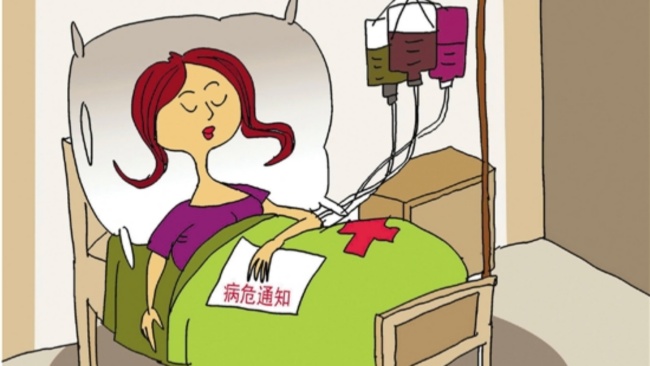
It was thin, almost insultingly thin, for something that had arrived by registered mail. The paper inside was official, printed with the kind of blue letterhead that made people lower their voices.Notice of Critical Condition. The words looked heavier than the envelope itself.
She had been expecting a bill. Rent was late. Her student loans had started sending emails with exclamation marks. But this—this was not about money.
Not exactly.
Her father, Daniel, lay two rooms away behind a curtain that never quite closed. He had collapsed at the grocery store, clutching a basket of oranges. The doctors used words likestable andmonitoring andwe need to run more tests. Emily nodded at all of them, though the only number she could hear was the one that would appear at the bottom of whatever came next.
When she finally opened the notice, there was no balance.
No total due. No amount past due. No red stamp. Just a list of observations, a date, a signature, and a line that read:Patient requires continued observation.
Emily stared at it until the letters blurred.
“Is it bad?” asked Lucas, her younger brother, appearing beside her with two paper cups of coffee that tasted like burnt plastic.
“I don’t know,” she said. “There’s nothing to pay.”
Lucas frowned. “That’s good, right?”
“Maybe.”
She had spent years believing that every serious thing in life came with a price tag. Illness had a cost. Fear had a cost. Even love, in her experience, eventually sent an invoice. She had grown up watching her mother stretch one paycheck across three weeks, crossing out groceries and adding them back depending on the day.
So a notice with no amount felt like a trick.
That afternoon, Emily sat by Daniel’s bed while he slept. His hands looked smaller than she remembered, the knuckles sharp beneath paper-thin skin. On the bedside table lay his wallet, a paperback mystery novel, and a folded receipt from the grocery store. Oranges: 4.29. Milk: 3.15. Bread: $2.40.
She picked up the receipt and turned it over.
On the back, in his messy handwriting, he had written:Call Emily about brakes. Pick up Lucas’s jacket. Tell Mom I’m fine.
Emily swallowed. He had writtenTell Mom I’m fine even though he had been buying oranges and milk and bread like any ordinary Tuesday.
A nurse came in to check the monitors. The machines beeped softly, a calm mechanical heartbeat.
“Is he going to be okay?” Emily asked.
The nurse glanced at the screen, then at Daniel, then at Emily. “He’s resting. That’s what he needs right now.”
Emily wanted to ask how much resting cost. She wanted someone to give her a number she could argue with, a payment plan she could manage, a deadline she could meet. Instead, the nurse adjusted the blanket and left.
Lucas returned with sandwiches from the cafeteria. He had mustard on his sleeve.
“Did you eat?” he asked.
“No.”
“You should.”
“I’m not hungry.”
“You’re always not hungry when you’re scared.”
Emily looked at him. Since when had he become someone who noticed that?
They ate in silence. The sandwich tasted like salt and warm bread, and for a moment Emily remembered being eight years old, sitting at the kitchen table while Daniel fixed a leaky faucet. He had told her then that some problems were louder than they were dangerous. The dripping had sounded like a storm, but the repair had taken ten minutes and a rubber washer.
Now she wondered if fear worked the same way.
By evening, Daniel woke. His eyes were cloudy at first, then clearer.
“Did you get my oranges?” he asked.
Emily laughed, and the sound surprised her. “They’re probably still in your basket.”
“That’s a shame.”
“I can buy more.”
He looked at her for a long time. “You don’t have to buy everything, Em.”
She wanted to tell him that she did, that she had been buying everything since the day she realized no one else would. But the words felt too large for the room.
Instead, she handed him the notice.
He read it slowly. When he finished, he folded it back along the same crease.
“Well,” he said, “at least they didn’t charge me for worrying you.”
Emily felt something loosen behind her ribs.
That night, she stayed until visiting hours ended. Before leaving, she placed the notice back in its envelope and slipped it into her bag. It still had no balance, no amount due, no deadline. But it no longer felt like a threat.
Outside, the parking lot lights buzzed above rows of cars. The air smelled faintly of rain. Emily stood beside her own car, keys in hand, and looked up at the hospital windows.
Somewhere behind one of them, her father was sleeping. Somewhere inside her, a number she had been carrying for years had quietly disappeared.
She did not know what would happen tomorrow. She did not know what the tests would show, or what the next letter would say. But as she started the engine, she realized she was not waiting for a bill anymore.
She was just waiting to see him again.