
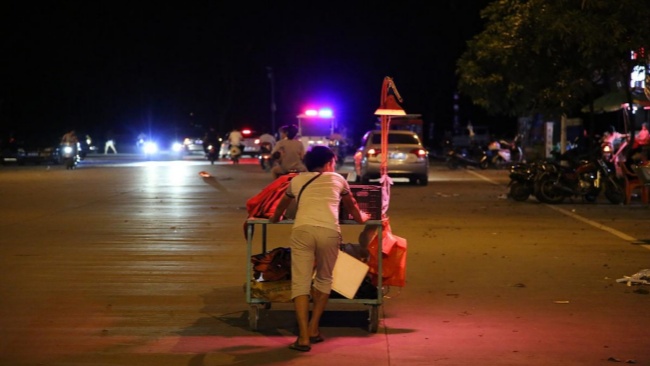

At 1:00 a.m. on the street corner, the cast-iron wok of stir-fried noodles was still sizzling. Old Chen turned down the heat and wiped the sweat from his brow with the towel draped over his shoulder. This was the last customer of the night—a young man wearing a wrinkled shirt with a tie loosely hanging around his neck.
The young man sat on a plastic stool, staring blankly at the noodles churning in the wok. Old Chen didn’t ask any questions; he simply added an extra fried egg—the edges slightly charred, the yolk still runny.
“Working overtime today?” Old Chen pushed the plate across the table and handed him a pair of chopsticks.
The young man paused for a moment, nodded, and said in a hoarse voice, “I was rushing a proposal. I went through eight drafts, but in the end, we went with the first one.”
Old Chen smiled but didn’t respond. He simply shifted over to make room, sat down, and poured himself a cup of herbal tea. The night breeze swept through the alleyway, causing the lightbulb overhead to sway gently, casting shadows on the wall that stretched and shrank.
The young man lowered his head to eat his noodles, chewing slowly, as if trying to savor the flavor of every single strand. Halfway through his meal, he suddenly looked up: “Boss, why do people push themselves so hard?”
Old Chen gazed at the office building across the street, its lights already turned off, and said, “I used to ask myself the same thing when I was young. Later, I realized that whether you push yourself or not isn’t the point. The point is whether, after you’ve pushed yourself, you can still sit down and enjoy a bowl of noodles.”
The young man said nothing more. He simply bit into the egg in his bowl, letting the golden yolk flow into the noodle broth. His eyes suddenly welled up with tears, but he quickly lowered his head and finished every last strand of noodles.
As he was leaving, he pulled out his phone to scan the QR code and paid an extra twenty yuan. Old Chen waved his hand. “No need. You’re my last customer before I close up—it’s on me.”
The young man stood at the entrance to the alley, glanced back, whispered “Thank you,” and then turned to walk into the night.
Old Chen finished cleaning up the pots and bowls, pulled down the roller shutter, and heard the lock click shut—as if putting a period at the end of the day. He looked up at the sky; the city’s light pollution had obscured the stars, but the moon was still there, hanging in the sky, clear and cool.
He suddenly recalled a night many years ago, when he, too, had sat at someone else’s food stall on a night just like this, eating a bowl of stir-fried noodles with an egg. Back then, he’d asked the same question, and the stall owner had simply smiled and said, “I’ve got to get up early tomorrow.”
Old Chen slipped the key into his pocket and slowly made his way home. The alley was quiet, with only the sound of his footsteps—one, then another—on the slightly cool asphalt.
Life is probably just like this—without many earth-shattering twists and turns, but full of things like a bowl of noodles, a single sentence, or a silent night. Yet it is precisely these small moments that allow us to keep moving forward even after we’re exhausted.
He turned the final corner; the lights at home were still on.