

James didn’t plan on going to the precinct that night. He planned on driving past it—the way he did every Thursday after his shift at the warehouse—eyes forward, hands tight on the wheel, pretending the building didn’t exist.
But something was different tonight.
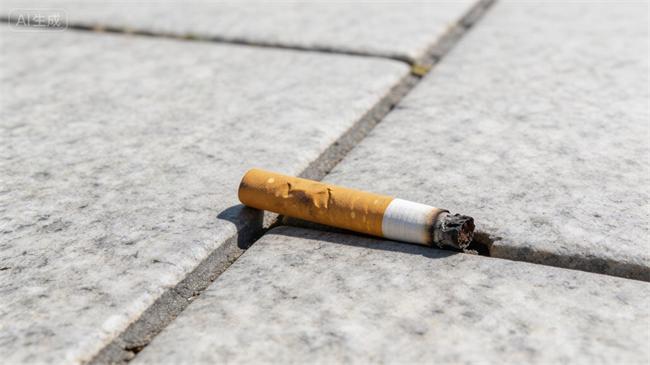
A single cigarette butt sat on the concrete ledge beside the front door, still glowing faintly in the dark. It wasn’t unusual to see trash outside a police station. What was unusual was the brand.
Red filter. Hand-rolled. The kind his brother used to smoke.
Lucas had been dead for eleven months.
James killed the engine and sat in the parking lot for a long time, watching the butt burn down to nothing. The precinct windows glowed fluorescent above. Inside, officers moved like shadows behind frosted glass. No one came out. No one seemed to notice the small orange eye blinking on the ledge.
He got out of the truck.
The air smelled like rain and exhaust. James crouched beside the door and picked up the remains with two fingers. The paper was still warm. Whoever had smoked it was either inside—or had left less than a minute ago.
He almost dropped it. Almost walked back to the truck and told himself it meant nothing. But then he noticed the ash pattern on the concrete below the ledge—three short taps, evenly spaced, like someone had been nervous. Lucas always tapped three times when he was lying.
James stood up and pushed through the glass door.
The lobby was empty except for a desk sergeant flipping through a binder. The man looked up, surprised.
“Can I help you?”
“I’m looking for someone,” James said. “My brother. Lucas Webb. He was in here about a year ago—gave a statement about the fire on Marlow Street.”
The sergeant’s expression didn’t change, but his hand stopped moving on the page.
“Lucas Webb,” he repeated. “That case is closed.”
“I know it’s closed. I’m not here about the case. I’m here because—” James hesitated. He looked back at the door. The cigarette butt was gone. Swept away or taken. “I think someone in this building knows something they haven’t told me.”
The sergeant studied him for a moment, then set down the binder.
“Take a seat.”
James sat. The plastic chair was cold. Minutes passed. A woman in a dark jacket came out of a back hallway and stopped when she saw him. She was older, maybe fifty, with silver-streaked hair pulled back tight. She carried a paper coffee cup in one hand and a file folder in the other.
“James?” she said.
He didn’t know her. But she knew his name.
“You’re Detective Hale,” he said, remembering too late. She had been the one to call him after the fire. After they found Lucas’s jacket near the burned-out apartment on Marlow.
“I am,” she said. “Come with me.”
Her office was small and cluttered. She closed the door and set the folder on the desk without opening it.
“You saw the cigarette,” she said.
It wasn’t a question.
James felt the warmth of the room press against his skin. “You left it there.”
“I left it there because I didn’t know how else to get you to walk through that door.”
He waited.
Detective Hale exhaled slowly. “Your brother’s statement was never entered into the official file. It was taken verbally, off the record, by an officer who’s since retired. Lucas told us he saw someone leaving the building before the fire started. He didn’t give a name, but he gave a description.”
“And?”
“And we couldn’t use it. Not without him willing to testify. He wasn’t willing. He was scared.”
James looked down at his hands. He could still feel the phantom warmth of the cigarette butt between his fingers.
“Why are you telling me this now?”
Hale opened the folder. Inside was a single photograph—grainy, taken from a security camera across the street. It showed a man in a dark hoodie walking away from the Marlow building twenty minutes before the fire. His face was partially turned, half-lit by a streetlamp.
James didn’t recognize him. But he recognized the way the man held his shoulders—hunched, hurried, like he was carrying something he didn’t want to be carrying.
“We pulled new footage from a neighboring business last month,” Hale said. “The camera had been offline during the original investigation. We just got access.”
“Does it show who started the fire?”
“It shows who was there.”
James stared at the photograph. The man in the hoodie looked ordinary. That was the worst part. He looked like someone you’d pass on the street and forget.
“What happens now?” James asked.
Hale closed the folder. “Now we do what should have been done a long time ago. We follow the thread.”
James nodded. He stood to leave, then paused at the door.
“The cigarette,” he said. “Was it really Lucas’s brand?”
Hale’s face softened, just slightly.
“No. I bought the same kind at the corner store. I thought if it meant something to you, it would get your attention.”
James looked at her for a long moment. Then he nodded again and walked out.
The precinct lobby was still empty. Outside, the concrete ledge was bare. The night had turned colder, and the first drops of rain were beginning to fall.
He sat in his truck for a while before starting the engine. The photograph was in his pocket now, folded carefully along the crease. He didn’t know what it would change. Maybe nothing. Maybe everything.
But as he pulled away from the curb, he realized something had shifted—not in the world, not yet, but inside him. For eleven months, he had been carrying the weight of a door he was afraid to open.
Tonight, someone had left a small, burning thing on the threshold.
And he had finally walked through.