

The sign was rusted, hanging crookedly off a chain-link fence that seemed to stretch into infinity. It didn’t say “Welcome.” It didn’t list the city’s population or its founding year. It simply read, in fading white paint: EXIT ONLY.
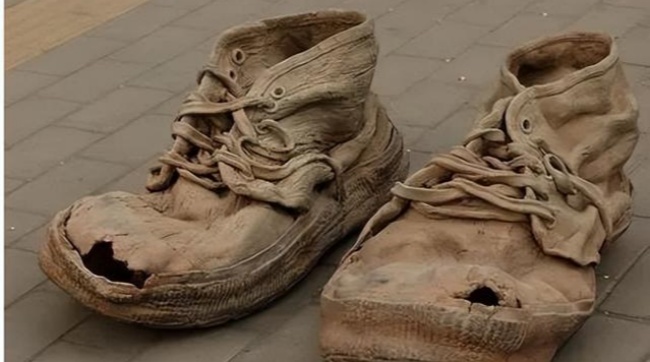
Lucas adjusted the strap of his backpack, the leather creaking in the silence. He had been walking for three days through the gray wasteland before finding this place. He was thirsty, his shoes were falling apart, and he was done with running.
“Exit only,” he muttered, testing the weight of the words. “Fine by me.”
He stepped through the gap in the fence. There was no gate, no guard, no ticket booth. Just a sudden shift in the air pressure, like the pop of an airplane cabin, and the smell of rain on hot asphalt.
The city was beautiful in a melancholic way. Cobblestone streets wound between brick buildings that looked like they belonged in a dozen different decades. A 1920s speakeasy sat next to a sleek, glass-walled coffee shop. A Victorian townhouse leaned comfortably against a brutalist concrete library.
But it was the silence that struck him first. It wasn’t empty; it washeld.
Lucas walked down the main avenue. He saw people. An old woman feeding pigeons in a square. A young couple arguing in hushed tones on a balcony. A businessman checking his watch, looking perpetually late.
Lucas approached the old woman. “Excuse me,” he said. “Where is the entrance to this place? The main gate?”
The woman didn’t look up. She scattered more crumbs. “There isn’t one, dear.”
“But I just came in,” Lucas said, frowning. “Through the fence.”
“You came through the breach,” she corrected gently. “That’s not an entrance. An entrance implies you can go back. You can’t.”
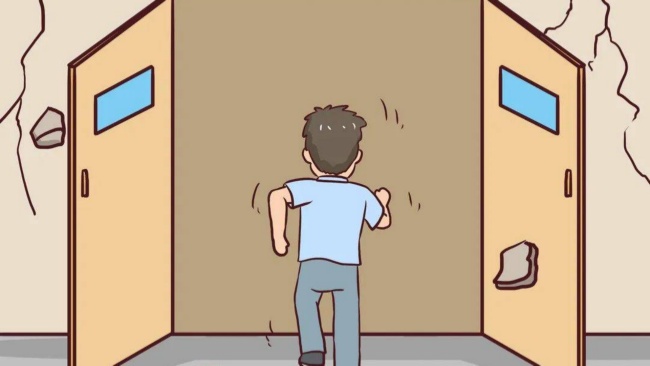
Lucas looked around. Now that he paid attention, he noticed the doors. Every building had them. Grand oak doors, sliding glass doors, rusted iron gates. And they were all slightly ajar.
He walked up to the nearest building, a bakery that smelled of yeast and burnt sugar. He pushed the door open. Inside, it was warm. A baker was pulling trays of sourdough from the oven.
“Can I help you?” the baker asked, wiping flour from his hands.
“I’m looking for the way in,” Lucas said, feeling foolish. “To the city.”
The baker laughed, a dry, cracking sound. “You’re already in, son. This is the End of the Line. You don’t comein here. You leave here.”
Lucas backed out of the shop. He tried the door again. It swung shut with a definitiveclick. He tried the handle. Locked. He looked at the window. Sealed.
He ran to the next building. A bookstore. The door was open. He stepped inside. The moment his foot crossed the threshold, the door slammed shut behind him. He spun around, grabbing the handle. It wouldn’t budge.
“Hey!” he shouted. “Let me out!”
A librarian shushed him from behind a stack of encyclopedias. “You can’t go back out to the street,” she whispered. “You can only go further in.”
Lucas felt a cold prickle of panic. He looked at the back of the store. There was another door. It led to an alleyway. He ran through it, bursting out into the cool air.
He was back on the street. But he was three blocks down.
He looked at the bakery he had just left. The door was gone. The wall was solid brick.
“It’s a one-way system,” a voice said.
Lucas turned. It was the businessman from the balcony. He was standing there, holding a briefcase that looked incredibly heavy.
“You don’t understand,” the man said, checking his watch again. “This city isn’t a place you live. It’s a place you process. You enter through the cracks in your life—the divorce, the layoff, the diagnosis, the grief. Those are your breaches.”
Lucas thought of the empty apartment he had left behind. The silence that had become too loud to bear.
“And the doors?” Lucas asked.
“Choices,” the man said. “You walk through a door, you leave a version of yourself behind. You can’t go back to who you were before you walked through. That’s the rule. No return tickets.”
Lucas looked down the long, winding street. He saw thousands of doors. Some looked inviting, glowing with warm light. Others looked dark and foreboding.
“What happens if I stay on the street?” Lucas asked.
“You become part of the scenery,” the businessman said, gesturing to the old woman feeding the pigeons. “You stop moving. You stop processing. You just… exist. Until you fade.”
Lucas looked at the woman again. She seemed translucent now, like a watercolor painting left in the rain.
He looked at his own hands. They were still solid. Still real.
He thought about the life he had run from. The pain that had driven him into the wasteland. He had wanted an escape. He had wanted a way out.
And here it was. A city made entirely of ways out.
He walked over to a small, blue door he hadn’t noticed before. It was set into the side of a brick wall, tucked between a tailor shop and a cinema. It looked ordinary. Humble.
“Where does this one go?” Lucas asked.
The businessman shrugged. “Somewhere else. Somewhere new. It won’t be easy. It never is. But it’s forward.”
Lucas reached for the handle. It was cold brass. He hesitated. The instinct to run, to find a way back to the familiar pain, was strong. But the street was quiet, and the old woman was fading, and he knew he couldn’t stay in the breach forever.
He turned the handle. The latch clicked.
He didn’t look back. He stepped through, and the door closed softly behind him, sealing the past away, one final time.
Subtle Reflection:
Sometimes, we spend so much energy looking for a way back to who we used to be, that we forget the only door that actually opens is the one leading to who we are becoming.