

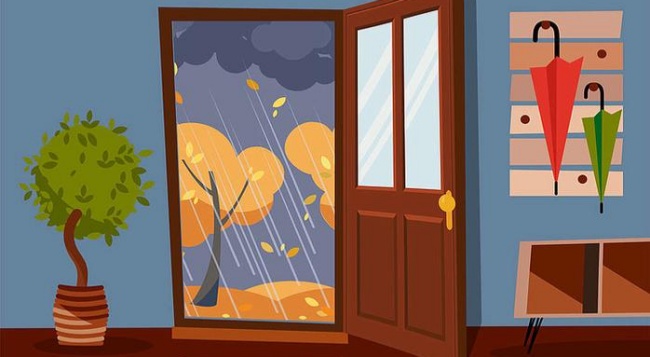

The rain in Seattle didn’t just fall; it erased. It turned the city into a watercolor painting left out on the sidewalk, blurring the sharp edges of skyscrapers and streetlights until everything looked like a memory of itself.
Elias loved the rain, mostly because it gave him an excuse to stay inside. As a junior archivist at the city library, his life was defined by the smell of old paper and the quiet hum of climate control. He was twenty-eight, quiet, and perpetually waiting for something he couldn’t name to happen.
That Tuesday, the sky opened up around 4:00 PM. Elias was walking home, his umbrella fighting a losing battle against the wind, when he saw it.
It was wedged between a laundromat and a boarded-up bakery on 4th Avenue. A door. Just a door. No wall, no frame, no building attached to it. It stood upright in the puddle, anchored by nothing but the rain.
It was heavy oak, dark and polished, with a brass handle that gleamed under the streetlights. It looked like it belonged in a Victorian manor, not on a wet sidewalk in downtown Seattle.
Elias stopped. He looked around. A woman with a stroller hurried past, eyes glued to her phone. A taxi splashed through a puddle, the driver oblivious. No one else seemed to notice the architectural impossibility standing ten feet away.
Elias stepped closer. The rain drummed against the wood, but the surface remained dry. He reached out, his fingers trembling slightly. The brass was warm.
He shouldn’t open it. He knew that. This was how horror movies started. This was how people disappeared. But the pull was magnetic, a physical tug in his chest that felt like nostalgia for a place he’d never been.
He turned the handle. It clicked—a solid, mechanical sound that cut through the noise of the storm.
Elias pulled the door open.
He expected to see the alleyway behind it. He expected to see the brick wall of the laundromat. Instead, he saw a room.
It was a study, bathed in the golden light of a fireplace. Rain lashed against a large bay window, but inside, it was dry and warm. The smell hit him first—old books, pipe tobacco, and cedar. A leather armchair sat facing the fire, a half-finished cup of tea steaming on the side table.
It was empty. Inviting.
Elias looked back at the street. The grey slush, the honking cars, the cold wind biting his cheeks. Then he looked back at the warmth.
He stepped through.
The transition was seamless. One moment he was wet and shivering; the next, the door clicked shut behind him, and the silence of the room wrapped around him like a blanket. The noise of the city vanished, replaced by the gentle crackle of the fire.
He walked to the window. Outside, the rain continued to fall, but it wasn’t Seattle rain. It was falling on a garden he didn’t recognize, lush and green, filled with flowers that bloomed in twilight.
Elias sat in the leather chair. It molded to his shape perfectly. For the first time in years, the knot of anxiety in his shoulders—the one he carried from deadlines, rent, and loneliness—began to loosen. He picked up the book from the side table. It was blank.
He stayed there for what felt like hours, or maybe minutes. Time felt fluid here, unmoored from the ticking clock of his apartment. He read the blank pages and somehow understood the story. It was a story about a man who stopped running.
Eventually, the fire began to dim. The light in the room shifted, turning a soft, sleepy blue. Elias felt a gentle urge to leave. Not because he was unwelcome, but because he knew, instinctively, that the door wouldn’t stay open forever.
He stood up, placing the blank book back on the table. He walked to the door and opened it.
The cold air of Seattle rushed in. The street was empty now. The laundromat was dark. The bakery was still boarded up.
Elias stepped out onto the wet pavement. He turned back to close the door, but as his hand left the brass handle, the rain intensified. A sheet of water fell between him and the frame. When it cleared, the door was gone.
There was only the brick wall of the laundromat, slick with rain.
Elias stood there for a long time, the water soaking through his shoes. He didn’t feel crazy. He didn’t feel afraid. He felt lighter.
He walked the rest of the way home in the downpour, but he didn’t open his umbrella. He let the rain wash over him, feeling the cold, real world against his skin.
The next day, the sun came out. Seattle was bright and sharp again. Elias went to work, filed his papers, and drank his coffee. But every time it rained after that, he found himself walking down 4th Avenue, just to check.
The door never appeared again. But sometimes, when the storm was particularly heavy, Elias would catch a faint scent of cedar and old books on the wind, and he would smile, knowing that somewhere, in the spaces between the drops, there was a place where he belonged.
Subtle Reflection:
We spend so much of our lives looking for solid ground, forgetting that sometimes, the most real things are the ones that only exist for a moment, in the rain.