

The pawnshop on 4th Street always smelled like old books and rain. Emily only went there because the rent was due in three days and her paycheck wouldn’t arrive until Friday. She’d been saving the necklace for emergencies, and this, she decided, qualified.
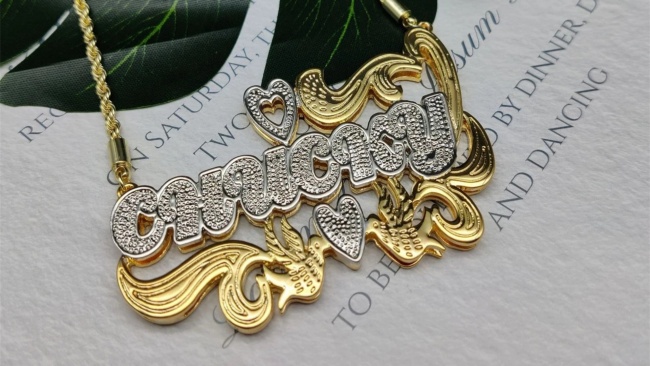
It was a thin silver chain with a small oval pendant, the kind you’d find in any jewelry store’s clearance bin. Nothing special, except for the engraving on the back: October 14, 1995 — her birthday, down to the exact date.
She’d found it six months ago in a coat she’d bought from a thrift store. At first she’d assumed it was a coincidence. There were millions of people born on October 14th. But the more she looked at it, the more it felt like it had been waiting for her. She’d worn it every day since.
Now she placed it on the counter.
The pawnbroker, a man named Harold with thick glasses and a permanent frown, picked it up without enthusiasm. He flipped the pendant over, squinted at the engraving, and set it back down.
“Twenty dollars.”
“Twenty?” Emily blinked. “It’s silver.”
“It’s plated. And the clasp is loose.” He pushed it back toward her. “Take it or leave it.”
Emily hesitated. Twenty dollars wouldn’t even cover her electric bill. But she had no other options. She nodded.
Harold slid a crumpled bill across the counter and dropped the necklace into a small plastic bag. Emily watched him do it, something tightening in her chest. She turned to leave.
“Wait,” Harold said.
She stopped.
He was holding the bag up to the light, studying the pendant again. His frown had deepened. “Where did you say you got this?”
“I didn’t say.”
“Right.” He set the bag down carefully, as if it might break. “Tell you what. I’ll give you fifty.”
Emily stared at him. “You just said twenty.”
“I changed my mind.”
“Why?”
Harold didn’t answer right away. He took off his glasses and rubbed the bridge of his nose. When he looked up, his expression had shifted — not warmer, exactly, but more focused. Like he’d just noticed something he’d missed before.
“Personal reasons,” he said finally. “Fifty. Cash.”
Emily took the money. It felt like the right thing to do, though she couldn’t have explained why.
She walked out into the gray afternoon, the fifty dollars folded in her pocket, and told herself she didn’t care what had changed his mind. But as she turned the corner, she caught her reflection in a shop window and instinctively reached for her neck.
The chain was gone.
For a moment she just stood there, fingers pressed against her bare skin. It was a strange sensation — lighter, somehow, but also wrong. Like a tooth that had been pulled and left a gap the tongue couldn’t stop exploring.
She told herself it was nothing. It was just a necklace. A piece of metal she’d been willing to sell five minutes ago.
But that night, lying in bed, she couldn’t sleep. She kept thinking about the engraving. October 14, 1995. Her birthday. And Harold’s face when he’d seen it — not greedy, not curious. Something closer to recognition.
The next morning, she went back.
Harold was behind the counter, polishing a watch with a soft cloth. He looked up when the bell above the door jingled, and for a second his expression went blank. Then he nodded, as if he’d been expecting her.
“I want it back,” Emily said.
“It’s not for sale.”
“You just bought it from me.”
“I changed my mind again.”
Emily leaned against the counter. “Why does it matter to you?”
Harold set the watch down. He reached under the counter and pulled out the plastic bag. The necklace lay inside, the pendant catching the dull light from the window.
“My daughter,” he said quietly, “was born on October 14th, 1995.”
Emily felt the air shift.
“She died,” he continued, “seven years ago. Car accident. She was wearing a necklace just like this when they found her. I never got it back.”
He pushed the bag across the counter. “I don’t know why it has your birthday on it. Maybe it doesn’t. Maybe I’m seeing what I want to see. But I’d like to keep it. Please.”
Emily looked at the necklace. Then at Harold’s hands, resting on the counter — knuckles swollen, nails short, the hands of a man who’d spent decades handling other people’s losses.
She thought about the thrift store coat. About the six months she’d worn it every day, feeling like it belonged to her. About the way it had felt when she’d handed it over — like losing something she hadn’t known she was holding.
“Keep it,” she said.
Harold’s eyes widened slightly. “You’re sure?”
Emily nodded. She wasn’t sure of anything, not really. But she was sure that some things find their way back to where they belong, even if the path doesn’t make sense.
She walked out of the pawnshop for the second time, lighter than before. The rent was still due. The paycheck was still three days away. But something had settled inside her — a small, quiet certainty, like a key turning in a lock she hadn’t known was there.
That night, she dreamed of a girl she’d never met, wearing a silver necklace, standing in the rain outside a shop on 4th Street. The girl was smiling. And for the first time in a long time, Emily woke up without feeling like something was missing.
Some losses aren’t yours to carry. And sometimes, letting go is the closest thing to finding what you were looking for.