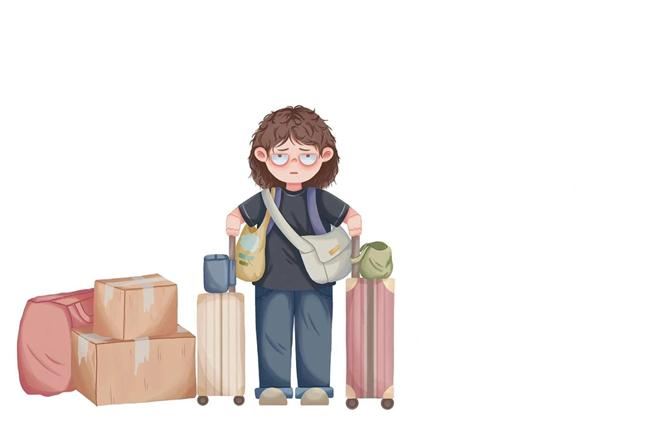

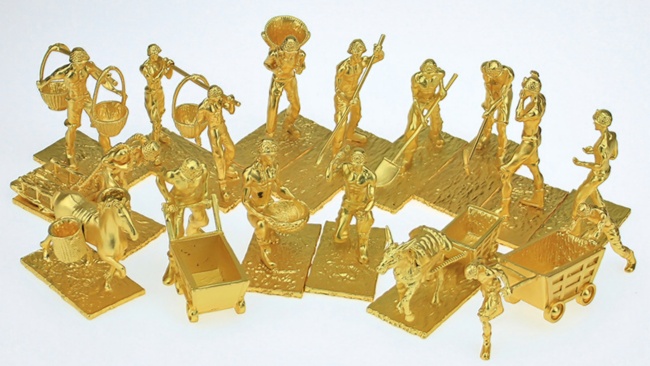

On Alan’s desk sat a set of golden miner figurines. It was a gift from his wife on the day he was promoted to department head. Twelve tiny alloy figurines—some swinging pickaxes, some pushing carts, and some carrying loads on their shoulders—each with taut muscles, their poses frozen at the moment of greatest exertion. Placed on rock-like bases, they stood like a silent army, overlooking his mountain of paperwork.
At first, Alan loved this set of figurines. He saw it as a source of inspiration, a reminder that success doesn’t come easily—just like these miners, who had to work up a sweat to mine for gold. Whenever a project hit a roadblock or team morale was low, he would instinctively glance at those little golden figures, as if he could draw strength from their eternal poses. He would even introduce the figurines to new subordinates, recounting with pride how he had “dug” his way up from the bottom to his current position.
However, at some point, that feeling changed.
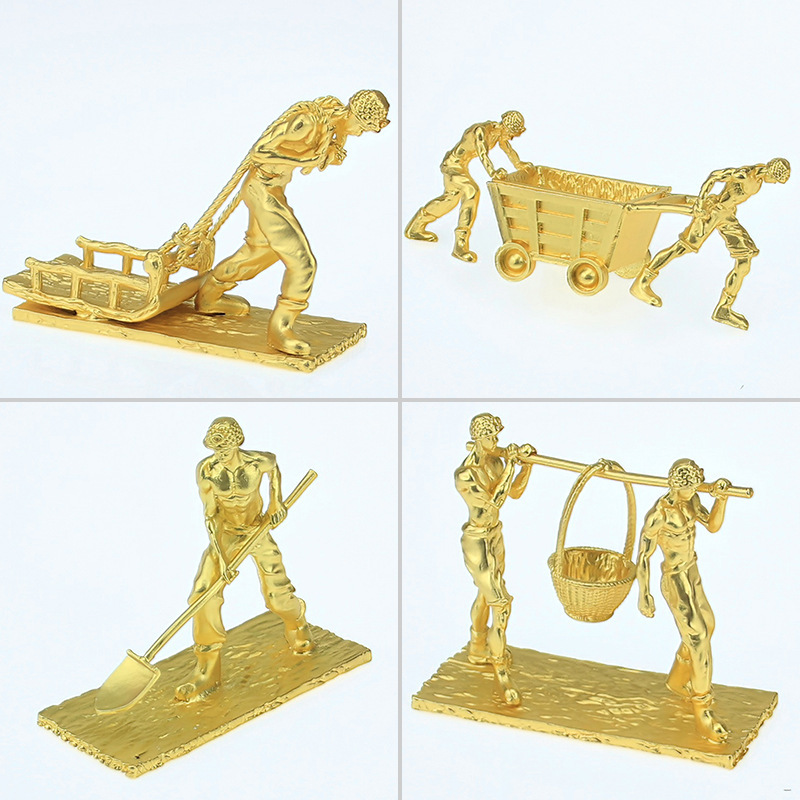
It was a night when he had worked late into the night, and he was the only one left in the office. The incandescent light above emitted a faint hum, casting his shadow long across the floor. Exhausted, he leaned back in his chair, his gaze once again falling on that row of miners. Under the light, they were no longer symbols of inspiration, but rather a group of prisoners frozen in time. The man pushing the cart was bent forward at an angle that looked as if he might snap; the one carrying the pole seemed to bear a burden of a thousand jun on his shoulders; even the one who appeared to be resting—squatting on the ground sifting ore—exuded an inescapable numbness.
They were forever toiling, with no end in sight. There were no cheers, no joy of harvest, not even a moment to lay down their tools. Their very existence is an endless cycle.
Alan suddenly felt a chill. He realized that, at some point, he too had become one of them. Every day, he pushed a mine cart labeled “Performance” as he labored his way through the mine called “the workplace.” He thought he was mining for wealth and status, only to discover that he was merely being driven by an invisible force, repeating the same motions, sapping his energy and passion. Perhaps the only difference between him and these figurines was that he could still feel fatigue, while they had been stripped even of the right to feel tired, left with nothing but their eternal, golden poses.
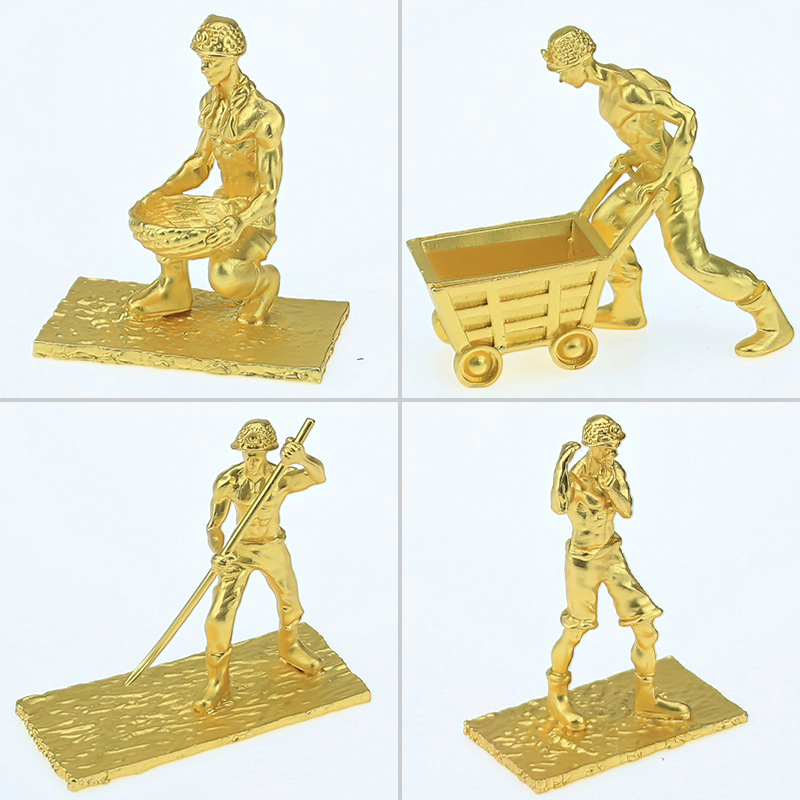
He reached out, his fingertips brushing against the back of the miner pushing the cart. The coolness of the metal seeped through his skin—hard and icy. He suddenly understood that when his wife gave him this gift, it may not have been entirely meant as encouragement. It was more like a gentle warning, or a mirror reflecting the truest essence of life—we are all, in our own ways, digging for what belongs to us, and the process itself is the whole meaning, regardless of the final treasure.
The next morning, when the first rays of sunlight streamed into the office, Alan did not immediately throw himself into work as he usually did. He sat quietly for a moment, watching the morning light cast a warm glow over the little golden figures. They still maintained their working postures, but in his eyes, the weight of their labor seemed to have lessened somewhat. He no longer saw them as cursed laborers, but as a group of silent companions.
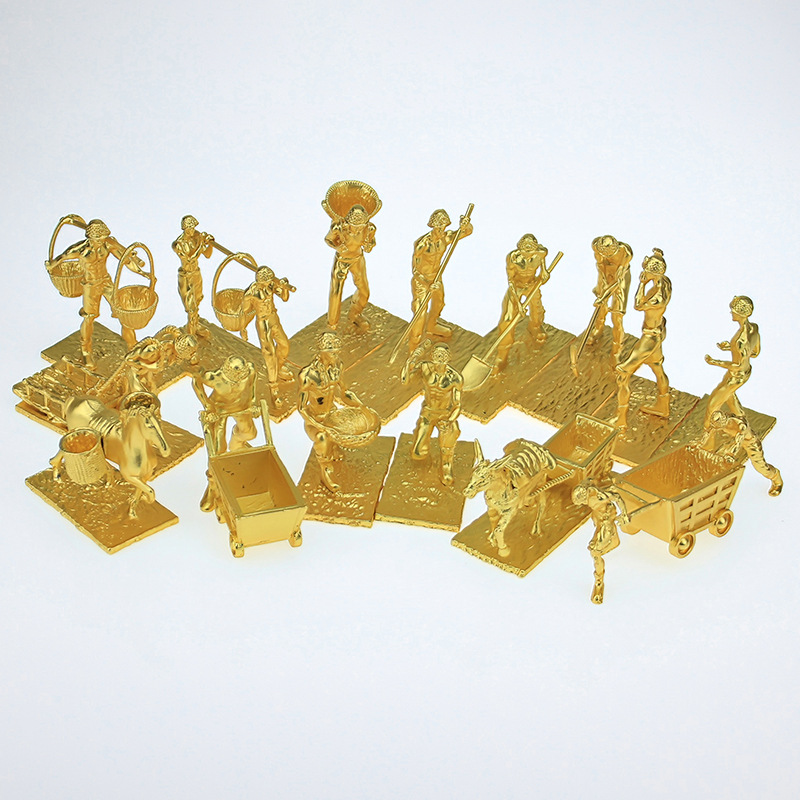
He gently adjusted the position of the miner pushing the cart so that he didn’t look quite so strained. Then he turned on his computer and began going through his emails. His actions were the same, but his state of mind had changed. It was as if something within him had shifted—not his attitude toward work, but his understanding of this “digging” he was engaged in. He was still on the road, but at least now he knew why he was traveling, and he allowed himself to pause occasionally along the way to feel the warmth of the sunlight.