
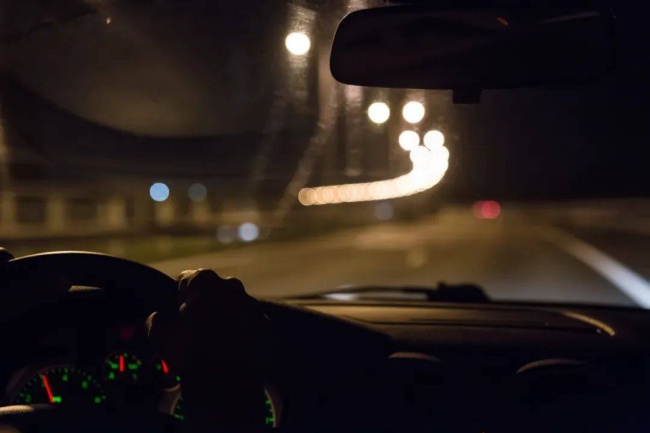

At 2 a.m., the city’s neon lights were finally beginning to dim. Leo sat in the back seat of his ride-share car, rubbing his temples wearily. As a junior data analyst who had just started his job, a month and a half of straight overtime had left him feeling like a lemon that had been squeezed dry.
His phone screen lit up, and the app popped up a notification that the ride-share had been successfully matched.
“Your ride-share passenger, Arthur, has boarded the vehicle.”
Leo paused for a moment and looked up at the front passenger seat. He hadn’t noticed when someone had gotten in. It was a middle-aged man wearing a dark gray trench coat. He was thin, wore gold-rimmed glasses, and clutched a black briefcase tightly in his hand.
“Sorry for getting in without saying hello,” Arthur said softly, his voice carrying a faint scent of old paper. “The system matched us automatically.”
Leo frowned. While late-night rideshares like this were cheap, the chances of running into strange people were high. He instinctively shifted closer to the car door and glanced at his phone’s navigation app. On the screen, the destination Arthur had set was a pitch-black, desolate area—an abandoned industrial park on the outskirts of the city, forty kilometers away.
“It’s so late. What are you doing out there?” Leo couldn’t help but strike up a conversation, trying to ease the awkwardness with small talk.
Arthur pushed his glasses up and stared out the window at the streetlights whizzing by: “I’m going to meet someone. Or rather, to deliver a document that’s ten years overdue.”
Leo’s heart skipped a beat. An abandoned industrial park? A document from ten years ago? It sounded too much like the opening of a suspense movie. He stole a glance at Arthur’s briefcase; it looked well-worn, with the corners badly frayed.
“I’m an auditor,” Arthur said suddenly, as if he’d seen right through Leo’s nervousness. “I specialize in liquidating things that no longer exist.”
“Things that no longer exist?”
“Like a bankrupt company, or… a forgotten promise.” Arthur turned his head, his glasses reflecting a cold glint. “Young man, you look exhausted too. Are you working yourself to the bone for that ‘grand future’?”
Leo gave a wry smile. “Yeah, to get tenured, to buy a house, to avoid getting weeded out. I’m worn out every day, but I always feel like if I just hang in there a little longer, there’ll be light ahead. ”
“Light, huh…” Arthur murmured, his fingers gently tracing the clasp of his briefcase. “I used to think that way when I was young, too. Back then, I believed that as long as I submitted that audit report, I could prove my worth and change the company’s fate.”
The car drove out of the city; streetlights grew sparse, and the surroundings were engulfed in deep darkness. The navigation prompt sounded particularly jarring in the empty car: “Turn right in 500 meters to enter the abandoned industrial zone.”
“Actually, there was a fatal flaw in that report—it took me an entire night to find it,” Arthur said, his voice growing somewhat distant. “But I was so desperate to win back then, so desperate to prove I was right. I concealed that flaw and submitted the report.”
Leo felt a chill run down his spine. He gave a nervous laugh and asked, “What happened next? Did you get promoted?”
“The company went bankrupt. Hundreds of people lost their jobs, and that flaw became the straw that broke the camel’s back,” Arthur said calmly. “As for me, because of that ‘perfect’ report, I became the scapegoat—and ruined my own career.”
The car slowly drove into the overgrown, weed-choked industrial park. The surroundings were deathly quiet, with only the headlights illuminating the mottled walls of the factory buildings ahead.
“We’re here,” Arthur said, unbuckling his seatbelt and opening the car door.
“Wait, there’s nothing here!” Leo shouted.
Arthur stood outside the car, the night breeze ruffling the hem of his trench coat. He glanced back at Leo, a hint of relief in his eyes: “No, the answers I’m looking for are right here. Young man, don’t get so caught up in rushing that you forget to look for the signs.”
With that, he turned and walked deep into the darkness of the factory building.
Leo hurriedly got out of the car and ran after him for a few steps, but apart from crumbling walls and shattered glass scattered all over the ground, there was no one there. No footsteps, no sign of Arthur—not even the black briefcase was to be found.
Standing in the cold wind of the desolate countryside, he suddenly felt a bit dazed. He pulled out his phone to call the police, only to discover that the name “Arthur” didn’t appear at all in the ride-sharing order history. The order showed that he had booked the trip himself, and the destination was right here.
Leo froze in place, his gaze fixed on the reflection on his phone screen.
In that moment, he suddenly realized that perhaps Arthur never existed at all. That late-night ride-sharing passenger was nothing more than a projection of his subconscious fear of his current situation. That “auditor” was simply the voice of reason that had been scrutinizing his life and warning him when he strayed off course.
He looked up at the faint city lights in the distance, then down at the desolate ruins at his feet.
“Don’t get so caught up in rushing that you forget to look at the road signs.”
Leo took a deep breath of the cold, early-morning air and suddenly felt that the report he had to submit by tomorrow morning didn’t seem quite so important after all. He turned and walked toward the car parked by the roadside. This time, he decided to take a detour to grab some breakfast and see where the sun would rise.