

The moment Xiao Lin pushed open the door after work, he almost thought he had walked into the wrong apartment.
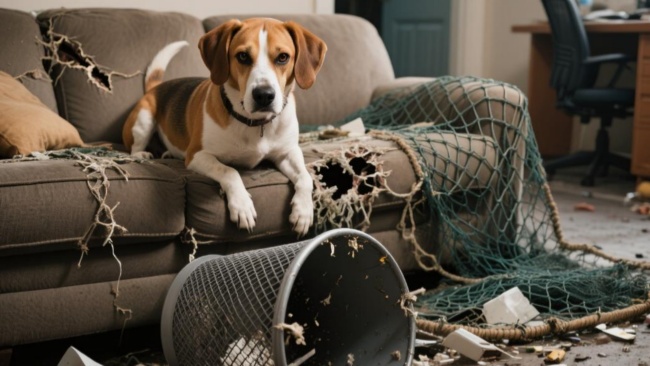
Cushion stuffing was scattered all over the floor; one slipper by the entrance was torn in half, with its pair nowhere to be found; the trash can was overturned in the middle of the living room, with fruit peels from the night before strewn everywhere. And the “culprit”—a two-year-old Golden Retriever—was lying by the door, wagging its tail gently, but with a hint of unease in its eyes.
Xiao Lin felt both angry and heartbroken. Every morning before he left for work, the dog would walk him to the door with its ears drooping; every evening when he returned, the dog would act overly excited, as if it had been waiting alone for ages. Over the past month, this had been happening more and more frequently. Xiao Lin started to wonder: Is it doing this on purpose? Is it taking revenge on me for going to work every day?
(This story is a fictional case, used only for scenario demonstration)
Destruction Behind the Scenes: It Might Not Just Be “Naughtiness”
Many pet owners have had similar experiences: you leave for just a short while, only to come home and find the place looking like it’s been “ransacked.” So the first reaction is often to blame the dog for being disobedient. But if your dog only starts destroying things, barking, peeing indiscriminately, or guarding the door after you leave, it might not just be mischief.
This kind of behavior is often related to dog separation anxiety. Separation anxiety isn’t simply about a dog “not being able to live without people”; rather, it feels nervous, uneasy, or even panicked when left alone. Consequently, it releases stress by chewing things, pacing back and forth, or barking, or it tries to locate its owner’s scent and traces.
Why Do Dogs Get Anxious?
From a dog’s perspective, when the owner leaves, familiar sounds, scents, and companionship suddenly disappear, throwing it into a state of uncertainty. Dogs that lack alone-time training, experience sudden changes in routine, move houses, stay in kennels, or have significantly less time with their owners are more prone to such behaviors.
It’s important to note that dogs destroying the house is usually not “revenge.” They don’t think like humans, “You went out, so I’ll chew the sofa.” More often, they are using the only methods available to them to relieve unease: chewing releases tension, guarding the door is a form of waiting, and barking might be an attempt to call out.
Of course, not all destruction should be attributed to separation anxiety. Puppies love to chew during teething, and insufficient exercise, boredom, or lack of rule-based training can also lead to destructive behavior. To judge, observe first: Does the dog mainly start destroying things after you leave? Are there accompanying signs of restlessness, drooling, frequent barking, guarding the door, or attempting to escape?
Three Simple Methods to Help Your Dog Adapt to Being Alone
Establish a Consistent “Leaving-Returning” Routine
Don’t make a long farewell before leaving; avoid repeatedly saying, “Mommy will be back soon” or “Be a good boy/girl.” The more grand the goodbye, the more nervous the dog becomes. When you return, stay calm for a while and interact only after its emotions have stabilized. This helps it understand that the owner’s departure is part of daily life and does not signal danger.
Give Your Dog Some “Alone-Time Practice” Every Day
Start with very short periods. For example, let it stay in a safe area while you step out for 1 minute, 3 minutes, or 5 minutes, then gradually extend the time. Each time it waits quietly, offer calm praise or a small treat upon your return. Do not leave it alone for a long time at the start, as repeated experiences of anxiety can make improvement more difficult.
Provide Safe Ways to Burn Energy Before Leaving
If a dog has enough energy and something to do, its anxiety will significantly decrease. Before leaving, you can take it for a walk, play sniffing games, or give it a safe food-dispensing toy or chew toy. Ensure the toy is suitable for the dog’s size and biting strength to avoid swallowing small parts. If the dog has severe destructive behavior, also put away dangerous items like wires, shoes, and medications.
Summary
If your dog is always destroying the house, it’s not necessarily doing it on purpose; often, it just doesn’t know how to cope with being alone. What to do about dog separation anxiety? The key lies in understanding its unease, reducing sudden separation stimuli, and helping it gradually build a sense of security through a stable routine, short alone-time training, and safe companionship.
Every dog has its own pace; some improve quickly, while others need more time. Be patient—it is also trying hard to adapt to every day of living with you.
FAQ
My dog barks and scratches the door as soon as I leave. Is it separation anxiety?
If these behaviors mainly occur after you leave and are accompanied by restlessness, drooling, inappropriate urination, destruction of items, or guarding the door, it may be related to dog separation anxiety. You can try shortening the alone time, establishing a calm departure routine, and gradually conducting alone-time training.
My dog’s destruction is severe. Do I need to see a vet?
If your dog shows persistent loss of appetite, excessive panting, self-harm, frequent vomiting or diarrhea, or if anxiety behaviors significantly worsen, it is recommended to consult a professional veterinarian or a pet behavior specialist promptly. The above information is for daily reference only and cannot replace professional veterinary diagnosis. If you notice related symptoms persisting, worsening, or accompanied by abnormalities, please take your pet to a vet in time.