

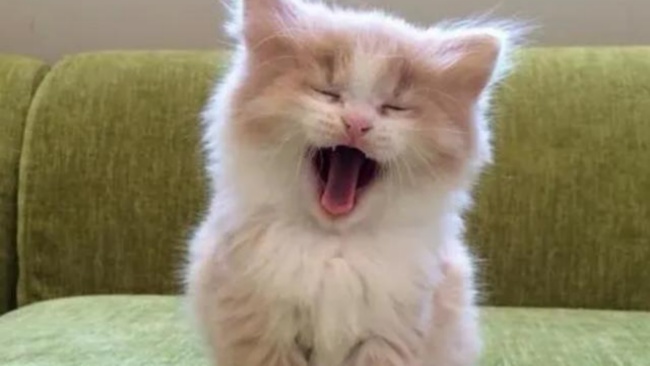

At 2 AM, I was drifting in and out of sleep when I suddenly felt something like a small hammer tapping my face. I opened my eyes to find my orange tabby, “Nian Gao,” standing on my pillow, alternately stepping on my cheeks with his front paws, his tail held high in a proud “wake up and play with me” pose. As soon as I pushed him away, he jumped back onto the bed and started sprinting back and forth between the duvet, the pillows, and my stomach, like a little racer doing “parkour” around the room.
I believe many cat owners are familiar with this scene. During the day, he lazily basks in the sun on the windowsill, but come nightfall, he becomes full of energy. Not only does he have his own disco party, but he also insists on dragging you into the fun. What does it mean when your cat does parkour and steps on your face at night? Behind this behavior lies the code of feline nature. Once you understand it, you can help the whole family get a good night’s sleep.
(This story is a fictional case for scenario demonstration only)
Midnight Excitement: Not Deliberate Mischief
Cats are crepuscular animals, meaning they are naturally most active at dawn and dusk. Although domestic cats have adapted their schedules to be closer to humans, their innate hunting instincts haven’t completely disappeared.
When your cat does parkour, steps on your face, or jumps on you in the middle of the night, it’s usually due to one of the following reasons:
Excess Energy: While you are at work during the day, your cat sleeps alone at home. With a whole day’s worth of energy accumulated and nowhere to release it, they naturally need to “vent” at night.
Hunger or Thirst: If they didn’t eat enough before bed, or if their water bowl is empty, they will remind you by stepping on your face or meowing.
Seeking Attention: If you have ever gotten up to feed or pet them after being woken up in the middle of the night, they will associate “making a fuss at night” with “getting attention,” forming a habit.
Boredom: If the house lacks toys for independent play or vertical spaces, the cat gets bored and turns the bed into a playground.
Understanding these reasons allows us to make targeted adjustments rather than simply blaming the cat for “not listening.”
3 Simple Methods to Help Your Cat Sleep Quietly
1. Play with them for 15 minutes before bed
Set aside 10 to 15 minutes before bedtime every day to interact with your cat using a wand toy, laser pointer, or feather toy. The key isn’t just to wave it around casually, but to simulate the process of “chasing-pouncing-capturing.” Get the cat to really run and jump until they are panting slightly and lying down to rest. This makes it much easier for them to fall asleep at night.
2. Adjust feeding times
You can schedule your cat’s dinner about an hour before bedtime, or feed them a small meal right after the pre-bed play session. Cats tend to feel more satisfied and sleepy after eating following a “hunt” (playtime). Also, ensure there is clean water in the bowl to avoid them disturbing you due to thirst.
3. Enrich their daytime environment
When your cat is home alone during the day, provide some puzzle feeders, scratching posts, window perches, or cardboard tunnels to keep them occupied. You can also open the curtains to let them watch birds and passersby outside. The richer the environment, the more energy they expend during the day, and the quieter they will be at night.
Summary
When a cat does parkour and steps on your face at night, it indicates they have excess energy, their schedule is out of sync with yours, or they are expressing a specific need. This isn’t the cat “deliberately retaliating”; it’s simply their nature. By playing before bed, adjusting feeding schedules, and enriching their environment, the issue of nighttime excitement in most cats can be significantly improved.
Owning a cat is like living with a furry little roommate. With a bit more understanding and patience, you will surely find a comfortable rhythm that works for both of you.
FAQ
How long will the midnight parkour and face-stepping last?
If you start establishing a regular routine from kittenhood, most cats will gradually reduce their nighttime activity as they reach adulthood. Adult cats usually take a few weeks to a few months to adapt to a new schedule. Consistency with pre-bed play and timed feeding will yield better results.
What should I do if my cat does parkour and steps on my face at night? Can I punish them?
Punishing your cat is not recommended, as it is rarely effective and may cause anxiety, potentially worsening the nighttime excitement. A more effective approach is to ignore the midnight fuss—do not respond, do not get up, and do not feed them. Meanwhile, ensure sufficient interaction and feeding before bed so they understand that “midnight is not playtime.”