

A Morning That Gave Emma the Creeps
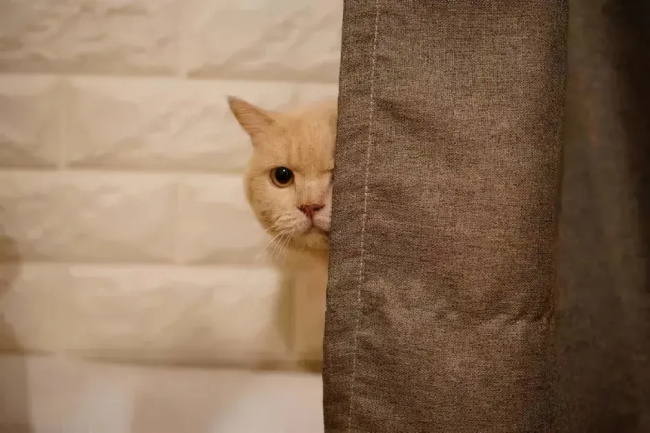
Emma lives in Portland and has a three-year-old orange tabby named Biscuit. She says she first noticed it on an ordinary Tuesday morning. She was sitting at the kitchen table drinking coffee when she looked up and found Biscuit crouched on the chair across from her, staring at her without moving. It wasn’t the impatient look that meant “feed me,” and there was no meowing—just quiet, steady watching.
“I thought it was hungry, so I poured some kibble, but it sniffed it once and came right back to staring at me,” Emma said. “Later I realized—it watches me brush my teeth, watches me put on my shoes, watches me scroll on my phone on the couch, and it still watches me. One night I got up for water, flipped on the light, and there it was sitting at the end of the hallway, eyes fixed right on me. I nearly threw my glass.”
She briefly wondered if something was wrong with her, and even googled “is my cat staring at me because it’s sick.” It wasn’t until she started paying attention to when Biscuit stared—mostly when she was about to leave the house, or right after she sat down coming home—that she began to realize the gaze might not be complicated, or scary, at all.
(This story is a fictional case, used only for scenario illustration.)
That Gaze Is Actually Saying Something
Many cat owners have had a similar experience: you’re not doing anything, yet your cat tracks your every move like it’s got a radar locked on you. Why does my cat always stare at me—the answer usually isn’t “cats are weird,” but rather how cats communicate and how closely they pay attention to you as a person.
Cats are observational animals. They don’t express every need through facial expressions and sounds; more often they rely on watching to gather information and predict what happens next. When a cat consistently directs its attention at you, it usually means you occupy a stable, important place in its daily life. This isn’t necessarily clinginess—it’s more like a check: you’re here, so the environment is familiar.
But context matters. How long the stare lasts, the distance, and the body posture all change the meaning. A relaxed, half-lidded stare is a very different thing from a stiff body with dilated pupils.
What Is the Cat Actually Looking At?
First, it’s reading your “next move.” Cats are highly attuned to routine. They remember what time you get up, that picking up your keys means leaving, that picking up a certain bowl means food. Staring at you is how they wait for the next signal. That’s why cats often stare before you do something, not after.
Second, it’s confirming safety. A cat’s trust in its environment and its people is largely maintained through sight. You sitting there, visible to the cat, means it doesn’t need to keep approaching to check. Some cats choose to stare from a slight distance precisely because that’s when they’re most relaxed.
Third, it may be waiting for a response. Cats initiate “eye contact” on purpose—especially when they want interaction, play, or simply want you to notice them. If you don’t respond for a while, some cats escalate to meowing or walking right over.
Fourth, it could be a learned habit. If every time it stares at you, you get up, talk to it, or hand out treats, that gaze has been “rewarded” and will naturally repeat. This isn’t the cat scheming against you—it just learned an effective method.
One thing to watch: if staring comes with hiding, over-grooming, changes in appetite, or frequent vocalizing, it may be related to stress or physical discomfort. The above information is for general reference only and cannot replace professional veterinary diagnosis. If symptoms persist, worsen, or come with other abnormalities, please take your pet to a vet promptly.
Three Small Adjustments You Can Make Right Away
1. Give the “gaze” a consistent response. If you don’t want your cat staring at you waiting indefinitely, establish a simple signal: when it looks at you, blink slowly and calmly, then go back to what you’re doing. After a few repetitions, the cat understands “noted, but nothing scheduled right now.” This is more reassuring to the cat than ignoring it entirely.
2. Move interaction time earlier. Many cats stare because they’re waiting for an uncertain interaction. Set two fixed play sessions a day—say, five minutes before you leave in the morning and ten minutes before bed—and play seriously with a wand toy. Once the timing is fixed, the cat’s waiting concentrates around those moments, and staring at other times often decreases.
3. Check for “gaps” in the environment. If your cat always stares at you while you work or eat, place a scratching post or a window perch near where it usually sits, so it has something to do. When the environment offers things to watch, scratch, and lounge on, the cat doesn’t need to put all its attention on you.
Final Thoughts
Why does my cat always stare at me? Most of the time it’s not creepy, and it’s not a sign of illness—it’s the cat’s way of checking on you, reading you, and waiting for you. Behind that gaze is a cat that has placed you into its daily order. Next time you feel a little spooked by the staring, try blinking slowly back at it—it’ll probably understand.
FAQ
My cat stares at me and blinks slowly—what does that mean?
Slow blinking is generally seen as a relaxed signal from cats, similar to “I’m no threat.” If your cat’s staring comes with half-lidded eyes and relaxed ears, it’s most likely trust and comfort—you can gently blink back in response.
My cat only stares at me but never comes close—does it dislike me?
Not necessarily. Many cats prefer to observe from a distance, and that actually shows they feel safe near you. A cat that stares without approaching is common in more independent personalities—giving it space is more effective than forcing a cuddle.