

The bell above the door gave a small, tired ring when Emma pushed it open.
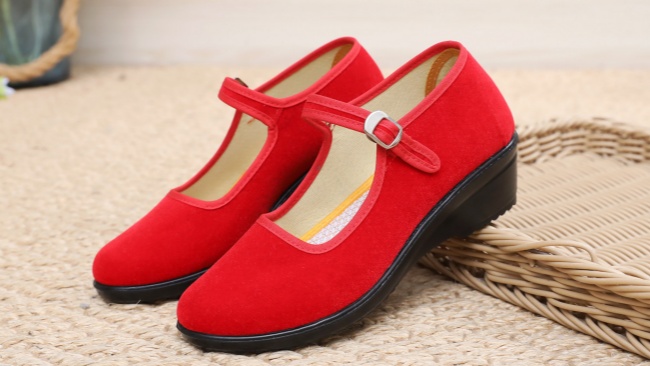
Inside, the shop smelled like old leather, dust, and something sweeter underneath—cinnamon, maybe, or memory. The walls were lined with shelves of shoes: black oxfords, scuffed loafers, silver slippers with cracked heels, and one pair of bright red dance shoes that seemed to glow in the dim light.
Emma had not meant to come here. She had been walking home from the community theater after another audition she did not get, her folder of headshots damp from the rain. At twenty-seven, she had begun to feel as though life was happening in rooms she could see through windows but never enter.
Then she saw the red shoes.
They were simple: low heels, soft leather, a thin strap across the ankle. Not fancy. Not new. But something about them made Emma stop.
“Those have been waiting,” the shopkeeper said.
Emma turned. The man behind the counter was older, with silver hair and kind eyes that did not smile quite enough.
“Waiting for what?” Emma asked.
“For someone who needs them.”
She laughed, but it came out smaller than she wanted. “That sounds like something a shoe salesman would say.”
He smiled then. “Only the honest ones.”
Emma looked back at the red shoes. She had not danced seriously in years—not since college, when her body had been braver than her confidence. Now she taught beginner ballet to children on Saturday mornings and told herself it was enough.
“How much?” she asked.
“For you?” The man tilted his head. “Try them first.”
The shoes fit perfectly.
Not almost. Not close. Perfect. The leather softened around her feet as if it had been made for her alone. Emma took three steps across the wooden floor, and the sound was clean and bright, like a small drumbeat.
She bought them without thinking.
That night, Emma placed the red shoes by her bed. She told herself she would wear them to class on Saturday. But when she woke early the next morning, the apartment quiet except for the hum of the refrigerator, she found herself lacing them on anyway.
She stepped into the hallway.
Tap.
Tap.
Tap.
Her feet moved before she decided they should. Not wildly. Not strangely. Just a slow, certain rhythm, as if the floor had become a stage and the hallway had widened into something grander.
Emma stopped, breathless.
The shoes had not forced her. She could have taken them off. She knew that. But for the first time in months, she did not want to.
On Saturday, she wore them to class. The children clapped when she demonstrated a turn. One little girl with crooked pigtails whispered, “Your shoes are magic.”
Emma smiled. “They’re just red.”
But after class, when the room emptied and the afternoon light slanted across the floor, she danced alone. Not for an audition. Not for approval. Not to prove anything to anyone who had ever said no.
She danced because her body remembered joy.
A week later, Emma returned to the shop.
The red shoes were gone from the shelf.
“Did someone buy them?” she asked.
The shopkeeper looked up from a pair of worn boots. “No.”
Emma frowned. “Then where are they?”
“They went where they were needed.”
She glanced down at her own feet. The red shoes were still there, scuffed now at the toes, the leather creased from use.
“I’m wearing them.”
“Yes,” he said.
Emma waited for him to explain. He did not.
Instead, he handed her a small paper bag. Inside was a single white ribbon.
“For your hair,” he said. “If you dance again.”
Emma left the shop with the ribbon in her pocket and the strange feeling that the world had shifted one inch to the left.
That evening, she received an email. Not an audition. Not a rejection. A local children’s hospital had seen one of her teaching videos and asked if she would lead a weekly movement class for kids recovering from long illnesses.
Emma read the message three times.
Then she sat on the floor of her apartment, the red shoes beside her, and cried without knowing why. Not from sadness. Not exactly. It was more like hearing a song from childhood and realizing you had forgotten the words, only to remember them all at once.
She never saw the shop again.
The next time she walked down that street, there was only a narrow bookstore with a blue awning. No dusty shelves. No bell above the door. No silver-haired man.
Emma stood there for a long moment, wondering if she had imagined the place entirely.
But the shoes were real.
And so was the class at the hospital.
On her first day, a boy named Lucas sat in a wheelchair by the window, watching her with careful eyes. He did not smile when she entered. He did not clap. He only said, very quietly, “I used to dance.”
Emma knelt beside him.
“Then you still do,” she said.
She did not wear the red shoes that day. She left them by the door at home, clean and waiting.
Instead, she played music through a small speaker and showed the children how to move their hands like wings, how to sway without standing, how to let rhythm find them even when their bodies were tired.
Lucas lifted one hand, then the other.
It was not much.
But Emma saw the light change in his face, and she understood something she had not known before: sometimes the most important dancing has nothing to do with being seen.
When the class ended, Lucas rolled toward the door. Before he left, he looked back at Emma.
“Will you come again?”
“Yes,” she said.
And for the first time in years, she did not wonder whether the answer was enough.
The red shoes stayed by her door after that, no longer glowing, no longer mysterious. Just shoes. Just leather and thread and a little bit of luck.
Emma sometimes thought the shop had chosen her. Other times, she thought she had simply been ready to choose herself.
Either way, something had changed.
Not loudly.
Not all at once.
But enough that when she walked down the street in the rain, she no longer felt like someone standing outside a window.
She felt like someone who had finally stepped inside.