
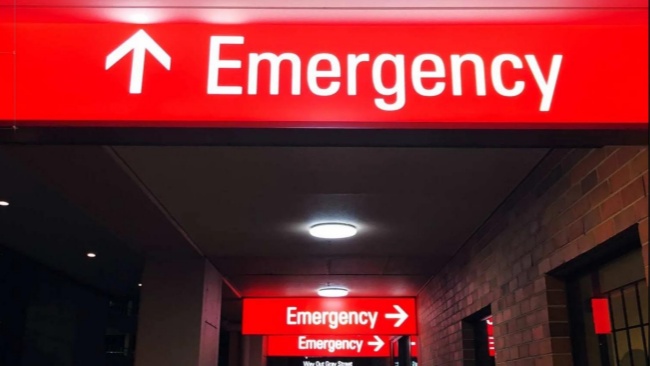

In the emergency room at 4 a.m., the air is always filled with the tangy scent of disinfectant mixed with stale coffee.
Leo sat on a row of plastic chairs, the light from his phone screen casting a glow on his pale face. As a project manager at an internet company, he was used to this rhythm: still replying to emails at 3 a.m., then being rushed to the hospital by a colleague at 4 a.m. due to severe stomach pain.
“Next patient, Leo.”
The nurse’s voice was mechanical and weary. Leo walked into the examination room clutching his stomach. He was seen by a gray-haired doctor whose name tag read “Dr. Evans.”
“What’s the matter?” Dr. Evans asked without looking up, his fingers flying over the keyboard.
“Stomach pain—it feels like something’s twisting inside.” Leo frowned and added out of habit, “Doctor, could you please hurry? I have a transatlantic conference at 9:00 a.m. that I can’t miss.”
Dr. Evans finally looked up, glancing at him over the rim of his reading glasses. His gaze was unreadable, revealing only a detachment that seemed to have seen through life and death. “Go get an X-ray and have your blood drawn. You’re not going anywhere until the results come back.”
Leo reluctantly returned to the hallway. Sitting next to him was a young man in a gray hoodie—he looked to be in his early twenties—who was resting his eyes with headphones on. An IV patch was stuck to the back of his hand, and the fluid in the IV tube was dripping down drop by drop.
“Hey, buddy, did you pull an all-nighter too?” Leo tried to strike up a conversation to ease his anxiety.
The young man took out one earbud, smiled, revealing a row of white teeth: “I guess so. I’m a game developer—I pulled an all-nighter last night to launch a new version.”
“We’re in the same line of work!” Leo’s eyes lit up. “I’m working on an e-commerce backend system. This industry is no walk in the park—I was just worrying about my project’s progress a moment ago.”
“Yeah,” the young man said, pointing to his IV bag. “To meet the deadline, I’d been drinking energy drinks for three days straight. Just a moment ago, I suddenly went black at my desk and collapsed. When I woke up, I was already here.”
Leo gave a wry smile, pulled his laptop out of his bag, and prepared to use the time to catch up on a few emails. “Same here. The doctor said I had acute gastric spasm—probably from going hungry. Once this IV is done, I’ve got to rush back to the office.”
The young man watched Leo skillfully open his laptop, a complex expression flitting across his eyes. “Do you do this often?”
“All the time. In our line of work, you’ve got to push yourself. ” Leo said as he typed, “Mortgage, car loan, and my kid’s tuition—which of those doesn’t cost money? If I don’t push myself, who will?”
The young man was silent for a moment, then suddenly asked a strange question: “When was the last time you watched a sunset?”
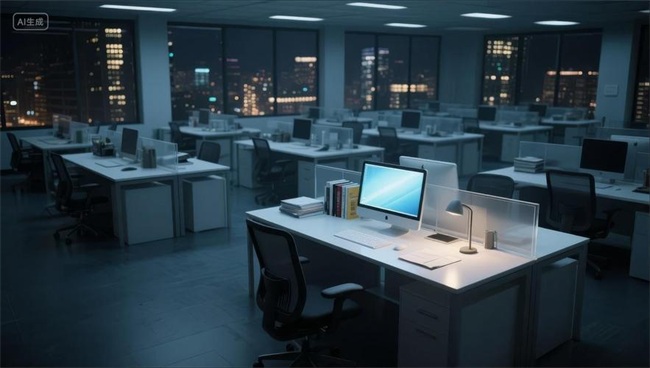
Leo’s fingers froze on the keyboard. A sunset? He paused, searching his memory for a long moment, but his mind was a blank. His daily routine consisted of home, the subway, and the office; the “light” he saw most often was the blue glow of his computer screen and the incandescent bulbs in his office.
“I can’t remember,” Leo answered honestly. “I’m too busy—I don’t have time to watch it.”
The young man nodded, put his headphones back on, and said softly, “I saw one yesterday from the ambulance. The sunset that day was purple—it was really beautiful. I was thinking at the time, if I were to die right then, would I even be able to take that purple sunset with me?”
Leo’s heart skipped a beat. He turned to look at the young man and saw that he had already closed his eyes; his breathing had become steady and deep.
Just then, a nurse walked over and removed the young man’s IV needle. “All right, we’ve observed him for half an hour with no reaction—he can go now.”
The young man opened his eyes, pulled out the IV needle, pressed the site for a moment, then stood up and stretched. “Thanks, buddy. Just chatting with you for a bit made me feel a lot better.” He slung his backpack over his shoulder, but as he reached the door, he suddenly stopped, turned back to Leo, and said, “Oh, by the way, my name’s Tom. I hope your transatlantic conference goes well, but don’t forget: machines can be fixed when they break, but people—sometimes they can’t be fixed.”
Tom pushed open the door and walked out, disappearing into the morning light at the end of the hallway.
Leo remained seated, staring in the direction Tom had gone, then looked down at the dense tangle of code and reports on his screen. Suddenly, the numbers and deadlines that had once caused him so much anxiety seemed somewhat absurd.
He thought of Tom’s mention of the “purple sunset” and realized it had been a long time since he’d looked up at the sky.
His phone vibrated. It was a WeChat message from his boss, urging him on: “Leo, are the meeting materials ready? Don’t let us down.”
Leo’s finger hovered over the screen. He glanced at the time: 4:50 a.m. The sky outside the window was already turning pale, and a faint golden light was trying to pierce through the city’s smog.
He didn’t reply to his boss. Instead, he closed his laptop and stuffed it back into his bag.
“Doctor,” Leo stood up and walked toward the consultation room, “Is my prescription ready? I want to go home and sleep.”
As he stepped out of the emergency room building, the cold morning breeze hit him in the face. Leo stood on the steps and took a deep breath. He pulled out his phone and snapped a photo of the sky. Although it was just a hazy white, he knew that in a little while, the sun would rise.
At that moment, he hadn’t decided to quit his job, nor had he vowed to change his life. He simply felt that perhaps he could wait a little longer to drink that cup of coffee this morning—and go see for himself whether the sun was truly golden.
This slight shift gave him a long-lost sense of light, carefree freedom.