

When Mark placed that quirky frog figurine on his desk, the entire cubicle fell silent for a second.
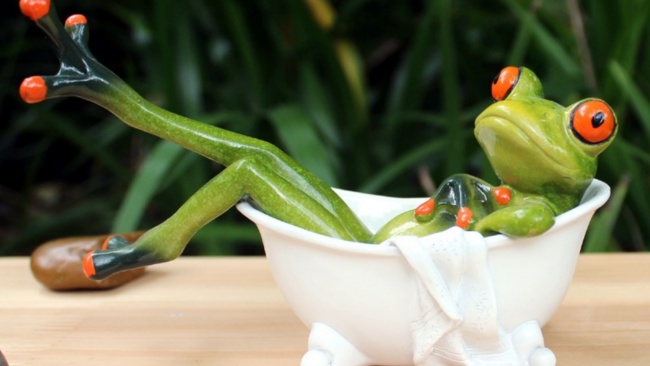
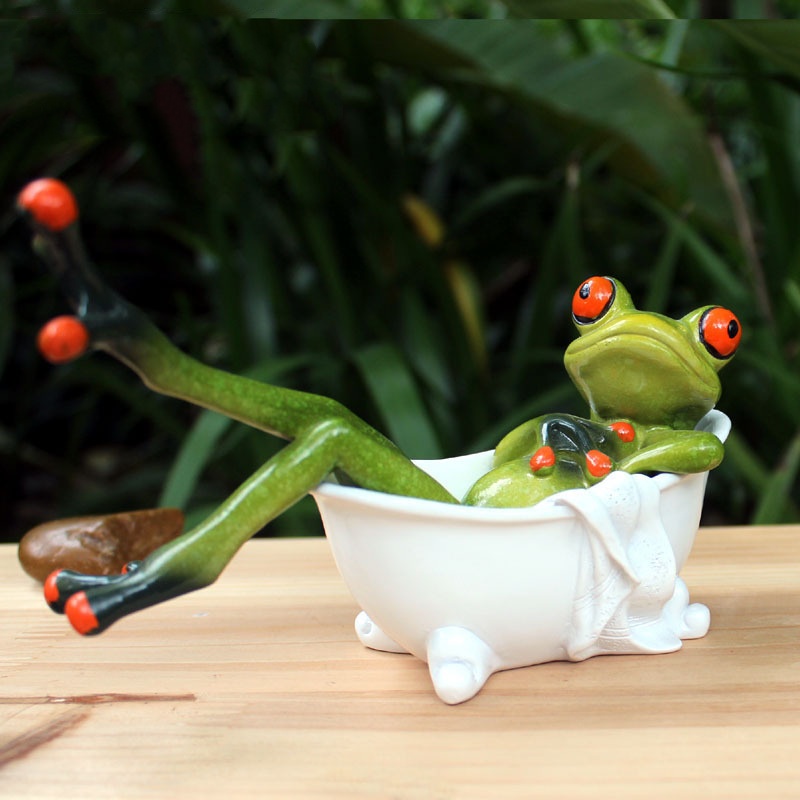
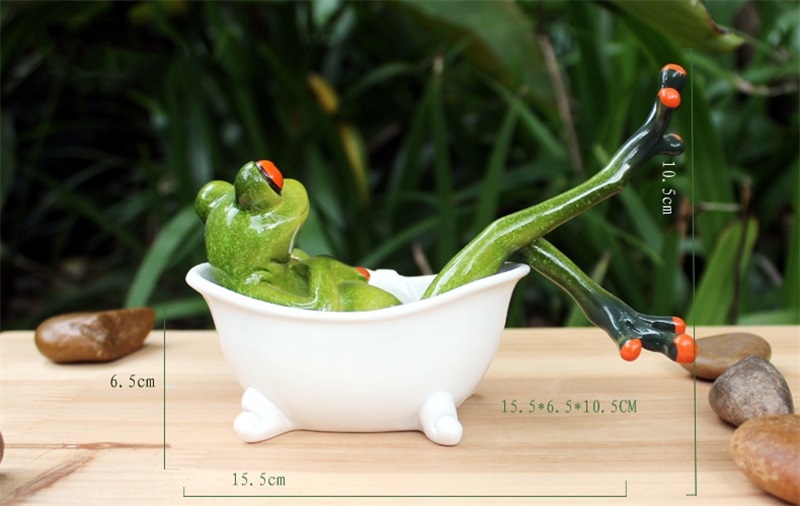
It was a resin red-eyed tree frog, lounging in a miniature white bathtub in an extremely defiant pose. One of its hind legs was kicked high in the air, almost kicking the monitor next to it, and its bright red toes glowed with an eerie sheen under the fluorescent lights. Its eyes were wide open, and the corners of its mouth seemed to curl into a mocking smile, as if to say, “Look, this is the life you’ve earned by working so hard, and I’m enjoying an eternal vacation.”
“That’s so… avant-garde,” my colleague Susan managed to say with a forced smile as she walked by.
Mark shrugged. “I think it’s stress-relieving. Look how relaxed it is.”
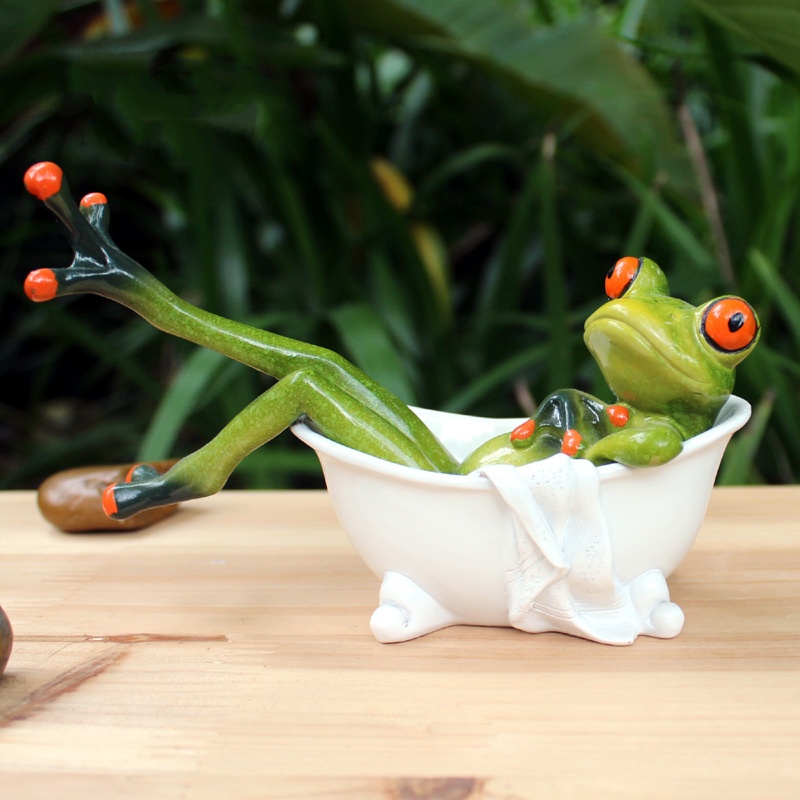
Indeed, in this office filled with to-do lists, unread emails, and never-ending meetings, the very presence of this frog was a provocation. It didn’t have to reply to anyone’s messages, submit reports by 5:00 p.m. on Friday, or pretend to be interested in the boss’s corny jokes. It just lay there, soaking in water that would never get cold, its leg propped up as if it could kick all the KPIs to pieces.
At first, Mark just found it amusing. Whenever he was so tormented by tedious data that he felt like banging his head against the wall, he’d turn and look at the frog. Its red eyes seemed to be telling him, “What’s the rush? We’re all going to turn to dust eventually anyway, so why not enjoy a nice soak first?”
This way of thinking was like a mental sedative. Mark began to “relax” just like the frog. When urgent project requests came in, he no longer jumped up in anxiety as he used to; instead, he would leisurely take a sip of coffee, thinking to himself, “Why rush? Even the frog isn’t in a hurry.” When his colleagues were frantically discussing proposals in the group chat, he chose to remain silent, even imagining himself lying in that mini bathtub with his feet propped up on the keyboard.
His work efficiency didn’t decline; in fact, his calm mindset made him even more organized. But that “wolf-like” drive—the very quality his boss had once admired—had vanished. He no longer volunteered to work overtime or replied to messages instantly on weekends. He had become like a true amphibian, crawling across the dry land of the workplace while his mind was constantly fixated on that nonexistent pond.
Late one night three months later, Mark was the only one left in the office.
He was rushing to finish a crucial annual report. Outside the window, the city was ablaze with lights, like a giant, never-sleeping circuit board. Mark felt a wave of unprecedented exhaustion—not physical fatigue, but a weariness stemming from the depths of his soul, born of his weariness with this endless cycle.
He turned his head and looked at the frog in the corner of his desk.
The fluorescent light flickered.
In that split second of shifting light and shadow, Mark experienced an illusion. What he saw was no longer a resin figurine, but a miniature, living creature. The frog still maintained that difficult leg-tucked pose, but its expression had changed.
It wasn’t one of enjoyment.
It was one of rigidity.
Mark suddenly realized that the frog had never moved. It wasn’t enjoying its vacation; it was frozen in that pose. That leg, held high in the air, wasn’t a sign of contentment—it was simply how the mold had been designed. There was no trace of a smile in its wide, red eyes, only a vacant stare. It was trapped in this small, white bathtub, forever unable to take a single step, forever unable to truly touch the water, and forever unable to leave this desk.
It wasn’t a symbol of freedom. It was a prisoner in another form.
Mark felt a chill run down his spine. He had always believed that by observing this frog, he was fighting against the alienation of the workplace and seeking inner freedom. But in reality, he had merely projected his own longings onto an inanimate object. He was no different from this frog. He, too, sat confined within a fixed cubicle, maintaining a rigid posture known as “professionalism,” his face set in a similar expression, waiting for the true end of the workday—a moment that might never come.
The so-called “sense of relaxation” was nothing more than another form of disciplined performance.
Mark reached out and gently touched the frog’s cool, high-arched leg. The resin felt hard and cold to the touch.
He shut down his computer, stood up, and for the first time, without glancing at the frog, walked straight toward the elevator.
As he stepped out of the building, the night breeze swept against his face. Mark took a deep breath. He hadn’t achieved any epiphany or liberation; tomorrow morning at nine, he’d still be sitting in that cubicle. But something had changed. He no longer needed the frog to remind him what relaxation was, because he had finally realized that true relaxation isn’t about mimicking a stiff pose, but about acknowledging his current lack of freedom and, in that clarity, retaining a sliver of pain that refuses to be assimilated.