

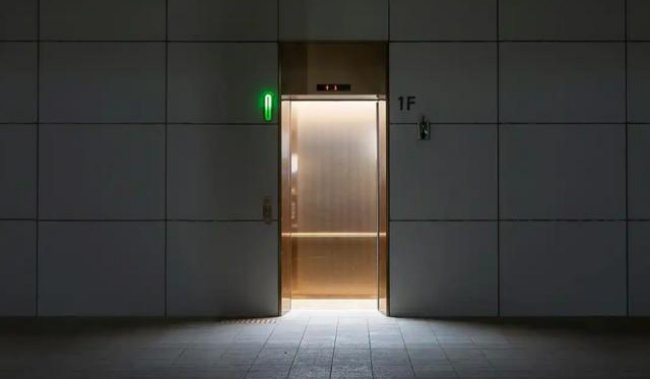

Mark recently moved into “Oak Apartments” in the city center. Although the rent for this old building was cheap, the elevator was always so slow it drove him crazy.
On Friday night, Mark worked late into the night before heading home. Exhausted, he stumbled into the elevator and pressed the button for the 14th floor. The elevator doors closed slowly, emitting a dull, metallic grinding sound.
The elevator ascended smoothly. Mark looked down at his phone, its screen casting a glow on his pale face. Suddenly, the elevator jolted violently and came to a halt.
The overhead light flickered a few times, then turned a dim, dark red. Mark’s heart sank. He hurriedly pressed the “Open Door” button, but it didn’t respond. He pressed the emergency call button, but all he heard through the intercom was a piercing static—no one answered.
Just then, the elevator doors slowly opened on their own.
Mark froze. He peered out, and the sight before him sent a chill down his spine.
This wasn’t the 14th floor—nor was it any floor he’d ever seen before. The hallway was lined with moldy, deep-red carpet; the walls were covered in peeling, old wallpaper; and the air was thick with a sickly sweet smell, like rotting flowers. At the end of the hallway stood a half-open wooden door, through whose crack a faint green glow seeped out.
Mark tried to press the “Close Door” button to escape, but it wasn’t working. He had no choice but to steel himself and step out, hoping to find the stairwell.
The moment he stepped out of the elevator, the doors behind him slammed shut with a loud “bang.”
Mark turned to pull the door open, only to find that the metal door fit perfectly, as if there had never been a gap to begin with. Even more terrifying was that when he looked back, there was no elevator door on the wall at all—just a wall covered with old picture frames.
He was trapped.
Mark had no choice but to steel himself and walk deeper into the hallway. As he passed the tightly closed doors, he faintly heard a faint scratching sound coming from inside, as if someone were desperately scraping at the door with their fingernails.
Finally, he reached the wooden door through which a green glow was seeping. He took a deep breath and pushed the door open.
The room was empty, except for a worn-out table standing right in the center, with an open guest register lying on it. Mark leaned in for a closer look; the register was densely filled with names and dates.
His gaze fell on the last line, and in an instant, his blood ran cold.
The last line read:
“Mark Evans, Check-in Date: Today, Check-out Date: Forever.”
Just then, he felt a chill breeze brush the back of his neck, and a hoarse voice whispered in his ear: “Welcome home, Mark. Your room is ready.”
Mark spun around abruptly, but saw nothing.
The next day, a security guard at Oak Apartments found a guest register at the end of the 14th-floor hallway. The ink on the most recent entry hadn’t even dried yet, but no one had ever seen that new resident named Mark again.
Only that old elevator would occasionally stop for no apparent reason on a nonexistent floor late at night.
The concept of the “nonexistent floor” in this story could be explored further—would you like me to help you craft a detailed description of the “floor buttons” Mark saw in the elevator before he died? It would plant a foreshadowing that’s chilling when you think about it.