

The key slid into the lock of Apartment 4B like it had never left.
Emma stood there for a long moment, her forehead pressed against the cool wood of the door, listening to the silence on the other side. Six months. Six months since she’d packed a single duffel bag, walked out, and told herself she’d never come back to this place.
She turned the key. The lock clicked.
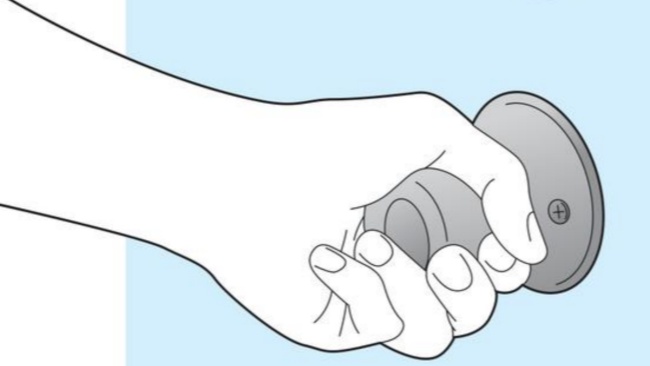
And when her fingers closed around the brass handle, she froze.
It was warm.
Not from the afternoon sun — the hallway faced north, always shadowed. Not from the radiator — the building’s heating wouldn’t kick on for another month. The warmth was faint, almost imaginary, the kind of heat left behind by a hand that had been there moments ago.
Emma pulled her hand back.
“Hello?” she called, though she already knew the answer. Her mother had sold the apartment in March. The new owner lived in Seattle. Nobody had a key to this door.
Nobody except her.
She pushed inside.
The apartment smelled like fresh paint and lemon cleaner — the universal scent of a place that has been emptied of its ghosts. The hardwood floors gleamed under a layer of polyurethane. The walls, once covered in her mother’s watercolor landscapes, were bare and white. Even the nail holes had been patched and sanded smooth.
Emma walked to the kitchen. The faucet dripped. The fridge hummed. Outside, a bus rumbled past on Ashland Avenue, and for a second the whole room vibrated with it.
She opened the cabinet above the sink — the one where her mother used to keep the good mugs, the ones with the chipped rims that Emma had loved as a child.
They were gone. Of course they were.
But on the shelf, pushed to the back, sat a small blue tin.
Emma’s breath caught.
She pulled it down with both hands. The lid was stiff, and when it finally gave way, the smell hit her — cinnamon, nutmeg, and something sweeter underneath, like vanilla left too long in a warm pocket.
Her grandmother’s cookie recipe. The one her mother had copied into this tin, in pencil, on a card so soft with handling that the edges had gone translucent.
Emma lifted the card out. The handwriting was unmistakable — her mother’s careful slant, the loops on her L’s and G’s like little invitations.
For Emma. Make these when the world feels too loud.
She hadn’t known it was there. Her mother had never mentioned it.
Emma sat down on the kitchen floor, her back against the cabinets, and read the recipe three times without moving. The measurements were smudged in places. A small coffee ring stained the corner. And at the very bottom, in different ink — added later, maybe years later — her mother had written:
She always made them on Tuesdays. You probably don’t remember. I do.
The apartment was completely silent now. The bus had passed. The fridge had stopped humming. Emma could hear her own breathing, slow and uneven.
She thought about the last conversation she’d had with her mother — the one in the parking lot of a grocery store, both of them standing on opposite sides of an open trunk, both of them saying things they didn’t mean. She thought about the months of not calling. The voicemails she’d listened to and deleted. The birthday she’d forgotten.
And she thought about this tin, placed carefully in the back of a cabinet, left behind for someone who might never come looking.
Her mother had known.
Emma closed the tin and held it against her chest. The metal was cool now, but the card inside still carried that faint sweetness — cinnamon and nutmeg and years of small, ordinary Tuesdays that she hadn’t known she was missing.
She stood up, walked to the front door, and paused with her hand on the handle again.
The warmth was gone this time.
But Emma didn’t need it. She had the recipe, and she had a phone in her pocket, and it was only four in the afternoon — early enough to call, late enough that her mother might be sitting in her kitchen with nothing better to do.
She pulled out her phone.
The number was still there, saved under “Mom,” exactly as it had always been.
Emma pressed call, and somewhere across the city, she hoped, a phone began to ring.
Some things we leave behind aren’t meant to be found. They’re meant to wait — patiently, quietly — until we’re ready to come back for them.