

The meter clicked to $18.40, and James still hadn’t said a word.
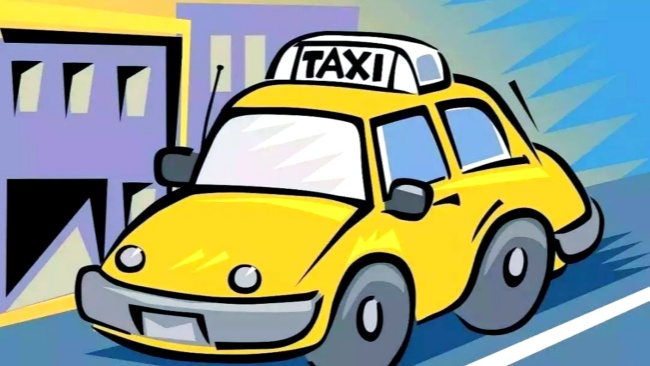
He sat in the back of my cab with his forehead pressed against the cold window, his breath fogging the glass in short, uneven clouds. It was 2:17 a.m. on a Tuesday, and the city had that particular emptiness that only exists in the hours between the last bar closing and the first delivery truck rolling out.
I’d picked him up outside St. Mary’s Hospital on 5th Avenue. He’d walked out through the automatic doors like a man moving underwater—slow, heavy, untethered. One duffel bag. No coat, even though October in Chicago cuts through cotton like a knife.
“Where to?” I’d asked.
“Route 9. Just drive.”
That was it. Four words, and I’d been driving ever since.
I’m not supposed to pry. Thirty years behind the wheel, and I’ve learned that the rearview mirror is a one-way street. You see people at their most honest—slumped in defeat, laughing too loud, crying into their phones—and your job is to be invisible. A moving room. A quiet box with wheels.
But something about this kid—couldn’t have been more than twenty-eight—kept pulling at me.
His hands were clenched in his lap, knuckles white. Every few blocks, his shoulders would shudder, just slightly, like an engine misfiring. He was fighting something. Fighting hard.
We passed the old steel mill on Pulaski, its smokestacks dark and skeletal against the orange glow of the sodium lights. Then the warehouse district, all boarded windows and chain-link fences. The kind of streets that make you lock your doors even when you’re already inside.
“Pull over,” he said suddenly.
I eased the cab to the curb in front of a shuttered laundromat. The neon sign above the door had been dead for years—just a black rectangle with a faded logo of a washing machine, spinning forever into nothing.
He didn’t get out.
For a long moment, nothing moved. Not the traffic, because there wasn’t any. Not the wind. Not even the hum of the meter, which I’d clicked off out of habit.
Then it came.
Not a sob, exactly. More like the sound a dam makes right before it breaks—a low, guttural crack from somewhere deep in his chest. His hands came up to cover his face, and his whole body folded forward like a building losing its spine.
He cried the way people cry when they’ve been holding it together for too long. Not pretty. Not quiet. The kind of crying that has no dignity left to protect.
I turned off the headlights. I turned off the interior light. I made myself as small as possible, as if my presence were an offense, as if darkness were something I could offer him like a blanket.
Outside, a plastic bag skittered across the sidewalk, caught by a gust of wind, then settled against the curb like a white flag.
I don’t know how long it lasted. Five minutes. Maybe ten. Time moves differently in the back of a taxi at 2 a.m.
When he finally lifted his head, he didn’t wipe his face. He just stared out the window at the dead laundromat sign, his eyes red and swollen, and said, very quietly:
“She asked me to drive her there. Every time. She said she liked watching the city go by.”
I didn’t know who “she” was. I didn’t ask.
“I never drove her,” he said. “Not once. I always took the train because it was faster. She said it didn’t matter. She said—” His voice cracked. “She said she’d always be there.”
He pressed his palm flat against the window again. The glass was still fogged from his earlier breath, and his hand left a clean streak through the condensation, like a wound opening in the dark.
We sat there for a while longer. The engine idled. The city slept.
Finally, he cleared his throat and sat up straighter. “Sorry about that.”
“Don’t be,” I said.
He reached for his wallet, pulled out a twenty, and held it between the front seats. I looked at it, then at him, then shook my head.
“Keep it.”
He hesitated. “The meter—”
“Is off.”
Something shifted in his face. Not happiness, exactly. But maybe the first small crack in whatever wall he’d been standing behind all night.
“Where to now?” I asked.
He looked out the window one more time—at the dead sign, the empty street, the city that had kept spinning without her. Then he leaned back and closed his eyes.
“Just drive.”
So I did.
We rolled down Route 9 with the windows down and the cold air rushing in, carrying the smell of wet pavement and distant rain. He didn’t speak again, and neither did I.
But somewhere between the laundromat and the river bridge, I noticed his hands had unclenched. And when we passed under the amber glow of the streetlights, I could’ve sworn—just for a second—that he smiled.
Not because anything was okay.
But because, for the first time that night, he wasn’t carrying it alone.