

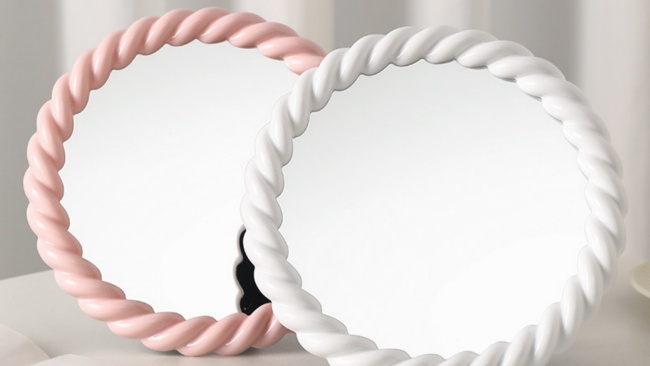

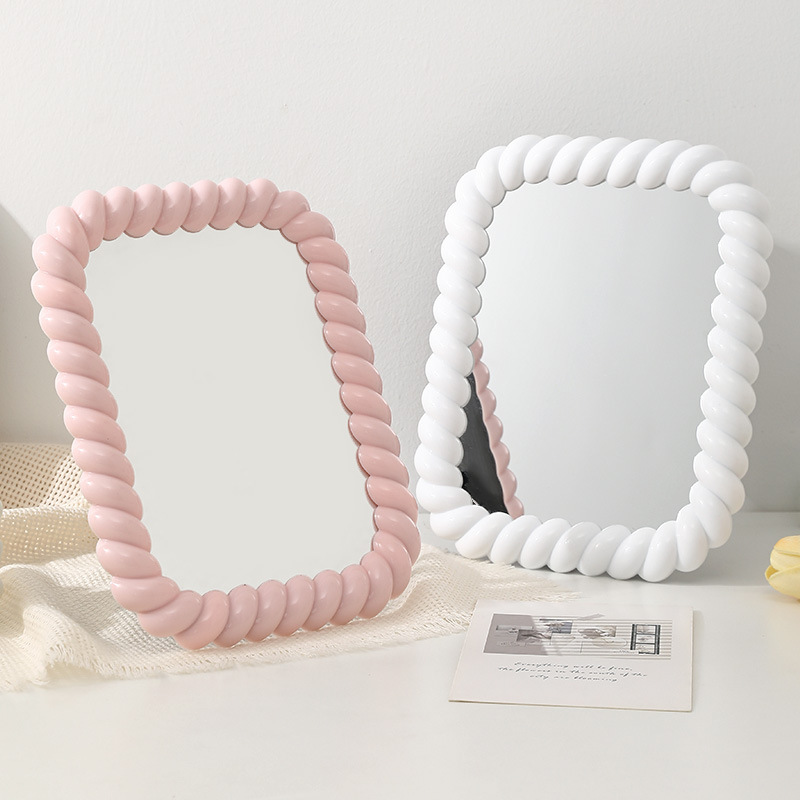
When Emily found that mirror at a flea market, she thought it was simply too cute. The round mirror was encircled by a twisted frame in alternating shades of pink and white, resembling a dollop of soft cream or a meticulously woven ribbon. The vendor described it as “cream-style”—the hottest trend in home decor at the moment—capable of offering a touch of gentle comfort amid the weariness of daily life.
She placed it on her vanity and used it to touch up her makeup every morning and night. In the mirror, she had fair skin, delicate features, and even the curve of her upturned lips was just right. But gradually, she began to notice something was off.
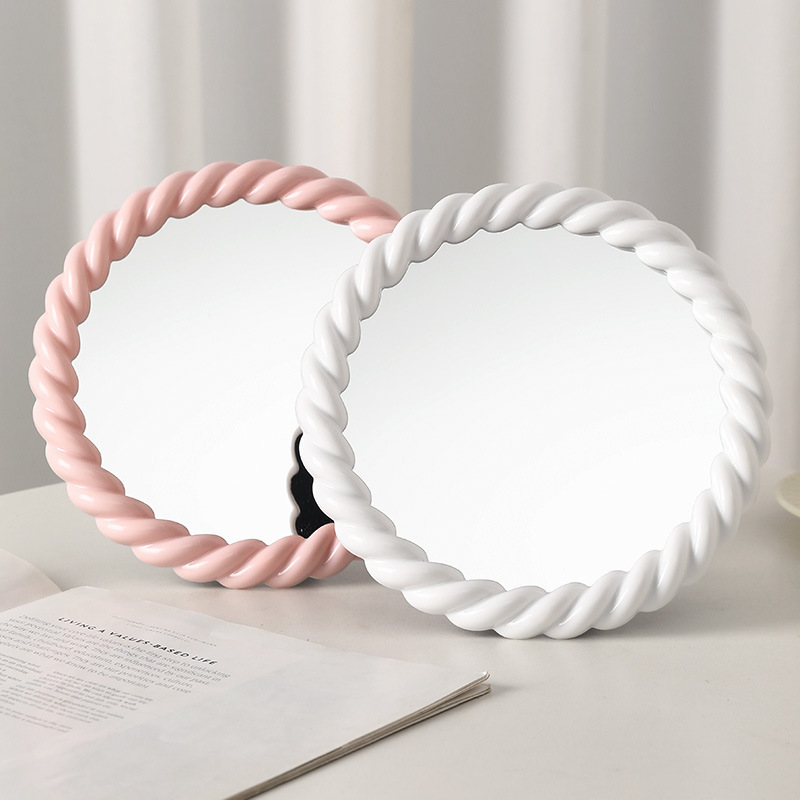
That evening, she sat in front of the mirror as usual, removing her makeup. The moment she wiped away her eyeliner with a cotton pad, her reflection in the mirror failed to follow suit. Those eyes remained wide open, staring intently at her—their gaze showing no sign of fatigue, only a kind of almost greedy scrutiny. Emily stopped abruptly, her heart pounding like a drum. She blinked, and the figure in the mirror blinked too; everything returned to normal.
She reassured herself that she was simply too tired. But the next day, as she applied lipstick in front of the mirror, the lips in the reflection were clearly painted a perfect true red, yet the lipstick tube in her hand still had its cap on. She looked down and saw that the lipstick in her hand hadn’t been opened at all. A chill crept up from the soles of her feet, and she practically fled from the vanity.
Over the next few days, these “mismatches” became increasingly frequent. Sometimes she was clearly smiling, yet the person in the mirror was frowning; other times, she’d raise her hand to brush her hair back, but the hand in the mirror remained completely still. Even more terrifying was that she began to notice the twisted patterns on the mirror frame seemed to be slowly writhing, as if alive, gradually converging toward the center of the mirror.
She didn’t dare look in the mirror anymore, yet she couldn’t bring herself to get rid of it. That mirror was like a silent observer, recording all the embarrassment and vulnerability she tried to hide. She finally realized that the mirror had never reflected her carefully curated image, but rather the true self deep within her—the one that had been suppressed and neglected: the self that would break down and cry because of work pressure, lie awake all night because of loneliness, and dare not take a single step for fear of failure.
Late one night, she sat before the mirror once more. This time, she wore no makeup and made no conscious effort to adjust her expression. She simply gazed quietly at her reflection—that bare, weary face. The figure in the mirror gazed back at her quietly as well, her eyes no longer scrutinizing, but filled with a deep, almost compassionate understanding.
At that very moment, the twisting, braided patterns on the mirror frame suddenly stopped. They no longer converged toward the center but instead slowly and gently unfurled outward, as if in a silent sigh.
Emily reached out, her fingertips gently touching the cool mirror surface. The figure in the mirror also reached out, her fingertips touching hers. There was no misalignment, no delay. For the first time, she felt that the person in the mirror was no longer a stranger, but herself.
She suddenly realized that the gentleness of the so-called “creamy style” might not stem from external adornments, but from a sense of acceptance—acceptance of all her imperfections, acceptance of those cracks we deliberately erase. True healing isn’t about dressing up to meet others’ expectations, but having the courage to see and embrace her true, imperfect self in the mirror.
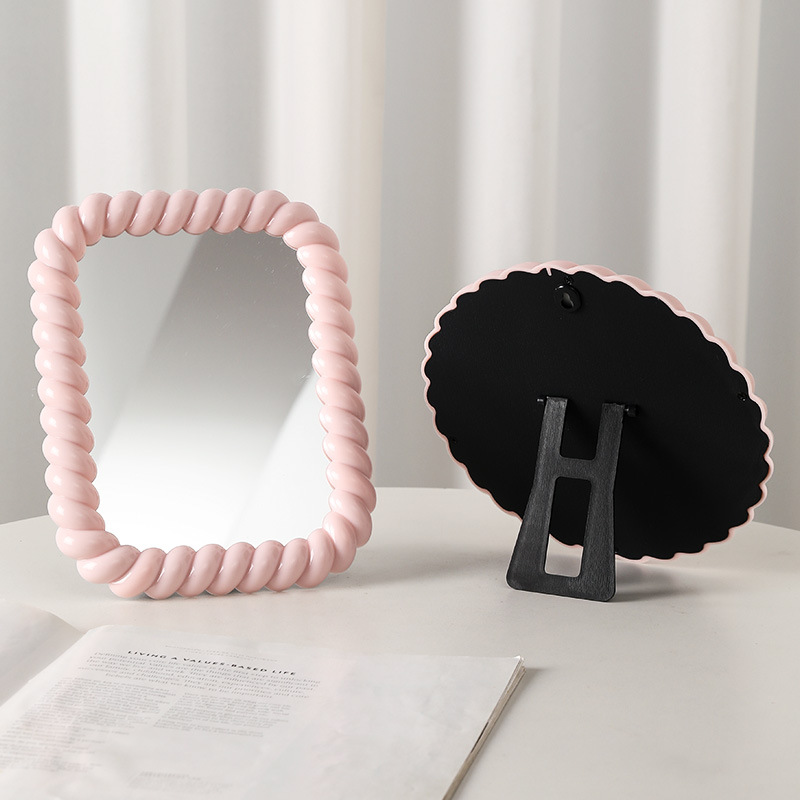
Since then, Emily has continued to apply makeup in front of that mirror, but she no longer strives for flawless perfection. She allows herself to have dark circles under her eyes and to occasionally look tired. And that cream-colored mirror has never again displayed any strange distortions. It simply stands there quietly, reflecting a person who is gradually becoming more whole and more authentic.
The core of this story is “accepting imperfection.” If you’ve had a similar realization, want to share your own story, or would like me to help you analyze it, feel free to reach out to me anytime.