
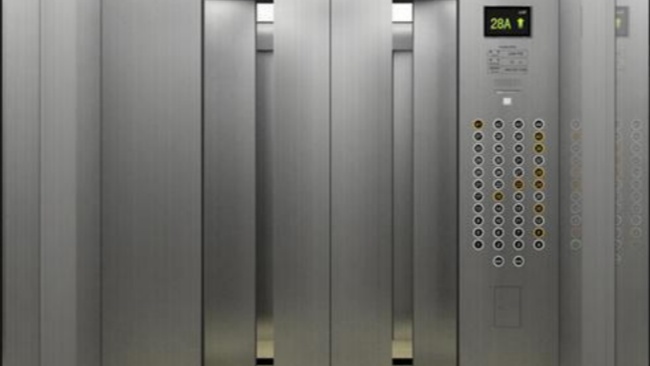

The elevator in the Meridian Building had been there since 1974, and everyone who worked in the building knew about the mirror.
It hung on the back wall, slightly tilted, framed in brushed steel that had gone dull with age. It was tall enough to show you from the knees up, which was useful if you needed to check your tie or smooth down a blouse before stepping into a meeting. But there was one problem.
It didn’t show people.
Not exactly.
If you stood in front of it alone, you would see the ceiling tiles, the scuffed floor, the flickering fluorescent light above. You might see your coat hanging on the rail behind you. But your reflection — your face, your body, your hands — would be absent, as if the mirror had simply decided you were not worth showing.
James Calloway had worked on the fourteenth floor for three years and had never once seen himself in that mirror. Neither had anyone else, as far as he knew. It was one of those things people mentioned in the break room with a half-laugh and then forgot about, like the way the third-floor bathroom always smelled faintly of cinnamon for no reason.
Then one Tuesday in November, everything changed.
James had been passed over for a promotion again. The position went to Derek Holt, who had been at the company for six months and whose greatest professional achievement, as far as James could tell, was knowing how to laugh at the right moments during conference calls. James had said nothing. He had smiled, nodded, and gone back to his desk, where he sat for two hours staring at a spreadsheet he couldn’t read.
That evening, he took the elevator down from the fourteenth floor. He was the last one in the office. The hallway behind him was dark. The building was quiet in that particular way old buildings get quiet after business hours — not silent, exactly, but holding its breath.
The elevator doors closed. James turned to face the front and saw himself in the polished steel of the control panel. Tired eyes. A jaw that had tightened without permission. A man who looked older than thirty-seven.
Then he glanced at the mirror.
And stopped.
Because there, in the mirror, was a version of himself he did not recognize.
The man in the mirror stood the way James used to stand — shoulders back, chin level, hands loose at his sides instead of clenched in his pockets. He wore the same gray coat. He had the same dark hair, the same narrow face. But his expression was different. It was not angry. It was not defeated. It was calm in a way James had not felt calm in years.
James stared at it.
The elevator descended.
The reflection did not move. It simply stood there, watching him with an expression that was almost gentle, as if it had been waiting for this moment and was not surprised that it had finally come.
James’s hand went to the emergency stop button. He did not press it.
“Who are you?” he said.
The mirror did not answer. The elevator kept descending.
On the twelfth floor, the doors opened. No one was there. James looked at the hallway, then back at the mirror. The man was still there, still standing in that quiet, steady way.
James thought about Derek Holt laughing in the conference room. He thought about the email he had drafted and deleted, the one that said he was leaving. He thought about his apartment, where the dishes had been in the sink for four days and the mail had piled up because he could not bring himself to open it.
He had become so used to disappearing that he had almost believed it was permanent.
The doors closed again.
On the ninth floor, the reflection raised one hand — slowly, the way you might wave to someone you were not sure would wave back.
James looked at his own hand, still buried in his coat pocket.
The elevator reached the lobby. The doors opened. Cold air came in from the street. James stepped out, then paused.
He turned back.
The mirror showed only the empty elevator, the dull steel frame, the ceiling light buzzing softly overhead.
No man. No reflection. Nothing at all.
James stood there for a long moment, his breath visible in the cold lobby air. Then he walked toward the glass doors, pushed them open, and stepped outside.
The city was loud and ordinary. A bus hissed past. Someone across the street was laughing into a phone. The wind carried the smell of roasted nuts from a corner cart.
James took a breath. He did not know what he would do next. He did not know if he would quit, or stay, or call his sister, or finally wash the dishes waiting in his kitchen.
But as he walked down the sidewalk, he noticed his reflection in a dark storefront window — tired, yes, but unmistakably there.
And for the first time in a long while, he did not look away.