
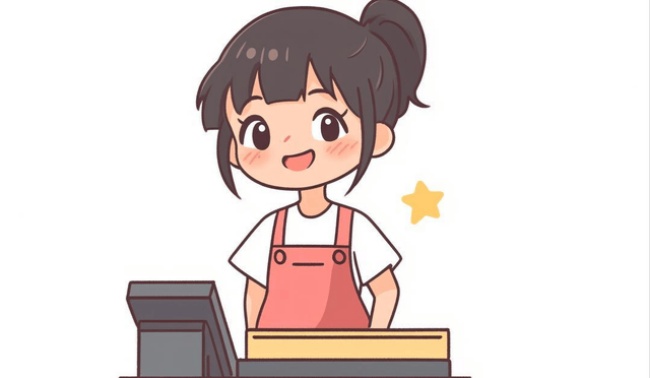

The automatic doors at Miller’s Market opened and closed about every eleven seconds, and Emily had learned to read people in the time it took them to reach the register.
She did not mean to. It had started as a joke during her first week, when her trainer, Marisol, pointed at a man buying frozen pizza and said, “That one’s lying about the dog food.”
Emily had laughed. Then she looked closer. The man had cat hair on his sleeve.
After that, she could not stop.
A young father came in every Tuesday with a baby on his hip and a list folded into quarters. He always bought the same six things: milk, bread, bananas, peanut butter, diapers, and one small chocolate bar. Emily started leaving the chocolate bar on top of the bag so he would see it first. One Tuesday, he smiled and said, “She likes the dark kind.”
Emily nodded. “Tell her I said good taste.”
He laughed like he had not laughed in a long time.
There was the woman with the silver bracelet who always paid in exact change. She came in after the pharmacy closed, usually around nine-thirty, and bought tea, a lemon, and sometimes a single peach. Emily noticed the bruise on her wrist before she noticed the bracelet. She did not say anything. The next week, she put the peaches on sale.
A boy in a red hoodie started coming in after school with a notebook and a pack of gum. He never bought much. One afternoon, he dropped his notebook, and the pages flipped open on the floor. Emily saw a sketch of the store, drawn from memory, with tiny notes in the margins:Mrs. Alvarez likes green apples. Old man Carter counts his change twice. The lady at register three always says “take care” like she means it.
Emily folded the page back carefully and handed it to him.
“You drew us,” she said.
The boy turned pink. “Sorry.”
“Don’t be,” she said. “You got my nose wrong.”
He grinned, and after that, he left the notebook open more often.
The faces stacked up in Emily’s mind like receipts in a drawer. The tired nurse who bought coffee at midnight. The couple who came in separately but always left together. The old man who talked to the plants in the garden center and bought plant food even though the fern by his cart looked perfectly fine.
Emily did not think of it as remembering people. She thought of it as noticing the small things they could not say.
Then, one Saturday, a man came in with a yellow notepad and a black coat that did not belong in August. He moved slowly through the store, pausing near the bread, then the cereal, then the register where Emily stood.
When he reached her lane, he placed a bottle of water and a pack of batteries on the belt.
“Long day?” Emily asked.
He looked at her for a moment too long. “You could say that.”
She scanned the items. “You want the big batteries or the small ones?”
“The small ones.”
“You usually buy the big ones.”
His hand stopped over his wallet.
Emily did not mean to say it. It came out before she could check it, like it had been waiting in line behind every other face she had kept.
He was not a regular. She had never seen him before.
But she had seen the woman who came in after him.
The woman with the silver bracelet.
The same woman who had not come in for three weeks.
The man’s voice softened. “You know my wife?”
Emily’s stomach dropped. “No,” she said quickly. “I mean, I know someone who shops here. Silver bracelet. Lemon tea. I thought maybe—”
She stopped. The man was staring at her, but not with anger. His shoulders fell, like he had been holding something heavy and had forgotten to set it down.
“She stopped coming here,” he said.
“I’m sorry.”
“She used to like this store.” He looked toward the front doors. “Said it was the only place in town where someone asked how she was doing and waited for the answer.”
Emily could not find a thing to say that would not sound small.
He paid in cash. When she handed him his receipt, he folded it carefully and put it in his coat pocket, next to the yellow notepad.
“Thank you,” he said.
“For the batteries?”
“For noticing.”
After his shift, Emily sat in her car and watched the parking lot empty. The store lights hummed above her. Somewhere inside, the automatic doors were opening and closing for someone else, counting out another evening in small purchases and quiet hellos.
She had always told herself she was just passing time. Scanning items. Making change. Watching the same faces come and go until they became part of the day.
But maybe that was not nothing.
Maybe noticing someone was the first way of saying,you were here, even when no one else was looking.
Emily started the car, then turned it off again. She went back inside, found a pack of lemon tea, and left it by the register for the next shift.
Just in case.