
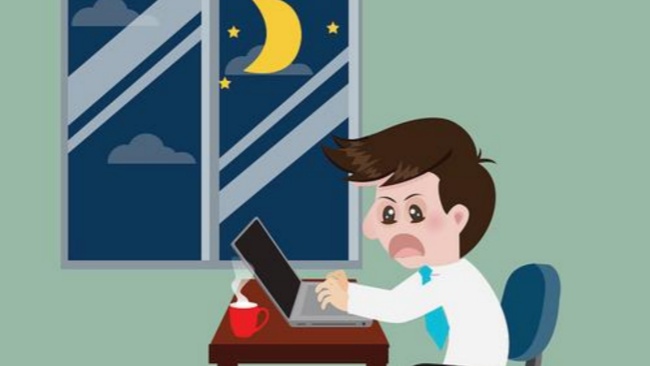

The office lights flickered once, then settled into the low hum of a building that had forgotten how to sleep.
Emily closed her laptop at 2:17 a.m., though she wasn’t sure why she bothered checking the time. There was no one left to tell. No manager waiting for the final report. No client refreshing their inbox. Just the soft green glow of her screen, the cold coffee she’d forgotten twice, and the strange quiet that only exists in offices after midnight.
She had promised herself she wouldn’t stay this late again. Not after last week. Not after the night she fell asleep at her desk and woke to a security guard tapping her shoulder with a flashlight. But promises made at 11 p.m. rarely survive until 2 a.m.
Emily packed her bag slowly, as if moving too fast might remind the building she was leaving. The elevator doors opened before she pressed the button. The hallway lights turned off behind her, one by one, like someone walking just out of sight.
Outside, the city was not empty, exactly. Cars had passed earlier. A delivery truck had rattled down Marlow Street around one. A couple had laughed near the corner bodega, their voices bright and temporary. But now, at 2:30, the sidewalks had that hollow look, the kind that makes every footstep sound like a confession.
Emily opened her rideshare app.
No cars available.
She waited ten seconds. Then thirty. The little map spun, searching for drivers who did not exist.
“Come on,” she whispered.
She refreshed.
Still nothing.
A block away, a streetlight buzzed and died. Emily told herself it was normal. Old bulbs. Bad wiring. The city had a hundred reasons for small darknesses.
She tried again.
No cars available.
This time, a message appeared beneath it:Your driver is on the way.
Emily exhaled. A car icon appeared on the map, two blocks east, moving slowly toward her. She watched it crawl forward, pixel by pixel, until it stopped directly outside the office building.
She looked up.
The street was empty.
No headlights. No engine. No driver waiting with the window rolled down. Just the curb, the sidewalk, and the pale blue reflection of her phone in the glass door behind her.
The app said: Driver: R. Calloway. Vehicle: gray sedan. License plate: 7MB-209.
Emily stepped outside and scanned the block. Nothing moved except a plastic bag caught against a storm drain. She checked the address again. The pickup pin was exactly where she stood.
Her phone buzzed.
Your driver has arrived.
A gray sedan turned the corner.
It moved quietly, almost too smoothly for a car that had been driving through city traffic. The headlights were dim, the paint faded to the color of rain. It pulled up to the curb without a sound and stopped.
The driver’s window rolled down.
The man inside was older, with thin gray hair and tired eyes. He wore a dark jacket and held the steering wheel with both hands, as if he had been driving for a very long time.
“Emily?” he asked.
She hesitated. “Yeah.”
“You heading home?”
The question felt strange. She had entered her home address when she booked the ride. Still, she nodded. “Yeah. 412 Birch.”
He glanced at the empty street behind her, then back at her face. “Get in.”
Emily opened the back door. The inside of the car smelled like old leather and peppermint. The seats were clean but worn, and the air vents blew cold air that smelled faintly of rain.
She gave him the address again, just to be safe.
“I know,” he said.
That made her pause.
He noticed. “Sorry. People say it every time. I remember the street.”
Emily forced a small laugh. “Right.”
The car pulled away from the curb.
For a while, neither of them spoke. The city slid past the windows in fragments: a closed bakery, a neon sign buzzing in a window, a man walking a dog that didn’t want to walk. Emily watched her phone. The app showed the route, a thin blue line cutting through familiar streets.
Then the line disappeared.
The screen went black.
Emily tapped it. Nothing. She pressed the power button. The phone stayed dark.
“Hey,” she said, her voice sharper than she meant it to be. “My phone just died.”
The driver glanced at her in the rearview mirror. “Happens.”
“Do you have a charger?”
“No.”
The word hung in the air longer than it should have.
Emily looked out the window. She knew this part of the city. They had passed the bakery two minutes ago. They should have been near the park by now. But there was no park. No street signs. No storefronts. Just long blocks of buildings she did not recognize, their windows dark, their doors missing numbers.
“Where are we?” she asked.
“Almost there.”
“That’s not Birch Street.”
The driver said nothing.
Emily’s stomach tightened. She reached for the door handle. It moved, but the door did not open.
“Let me out,” she said.
The car slowed.
“I said let me out.”
He stopped.
The silence outside was total. No traffic. No wind. No distant sirens. No hum of electricity from streetlights. Just the soft tick of the engine cooling.
Emily looked at the driver.
His eyes in the mirror were not angry. Not cruel. Just old. So old that for a second, she thought she might have misread him.
“You don’t have to keep going,” he said.
“Then open the door.”
He pressed a button. The lock clicked.
Emily pushed the door open and stepped onto the sidewalk. The air was colder than it should have been for August. She turned to look at the car, ready to memorize the plate, the driver’s face, anything useful.
But the gray sedan was already pulling away, its taillights shrinking into the dark until they vanished around a corner that had not been there before.
Emily stood alone.
She pressed her phone’s power button again. This time, the screen lit up.
No cars available.
She stared at the words until they blurred. Then she looked up.
Across the street, a single light burned in a window. A woman stood behind the glass, holding a mug with both hands. Their eyes met for only a second. The woman did not smile. She did not wave. But she did not look away, either.
After a moment, she lifted the mug slightly, as if to say:I see you.
Emily raised her hand in return.
The light in the window stayed on.
Emily began walking toward it, not because she knew the way, but because for the first time that night, the darkness did not feel completely empty.
She did not know if the car had been real. She did not know if the street had changed, or if she had. But somewhere behind her, the city kept its quiet breath, and somewhere ahead, a light waited without asking anything of her.
And maybe that was enough.