

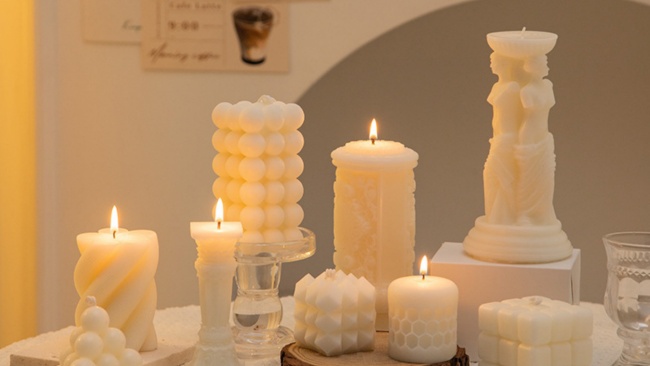

In Erin’s apartment, the air always maintained an almost sterile order. As a data analyst, she was accustomed to quantifying and categorizing everything. Her life was just like the geometric candles in her collection: sharply defined and mutually exclusive.
That weekend, she had just received a new set of scented candles. One was a pure white “U”-shaped candle, its lines as smooth as an unfinished arch; next to it was a pink “gourd”-shaped candle, formed by three stacked rings and covered with fine vertical striations. They lay quietly on the marble tray in the entryway, like two precision instruments from the future.
“Perfect,” Erin murmured in admiration. She loved this sense of certainty. A cube is a cube, a cylinder is a cylinder—they never overstep their boundaries or lose their shape, unless you light them.
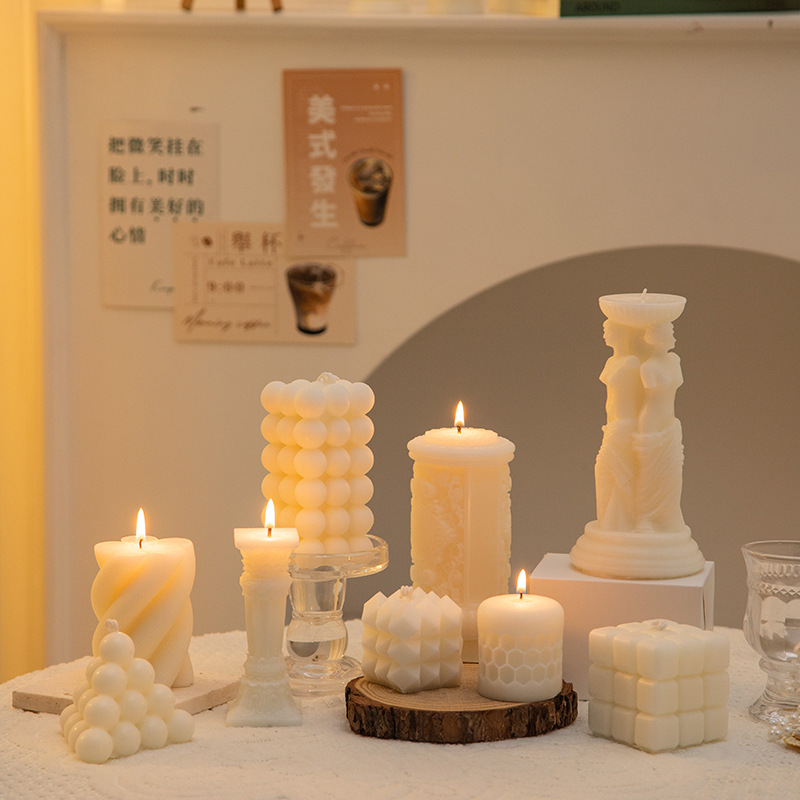
On Friday evening, a sudden downpour trapped Erin at home. Her scheduled video conference had been canceled, and the thunder outside the window seemed to be pounding on her nerves. Anxiety washed over her like a tide, and she desperately needed something to anchor herself. Her gaze fell on the “U”-shaped candle.
She struck a match and lit it.
The flame flickered briefly before settling into a steady burn. Erin sat on the couch, staring at the halo of light. According to the instructions, this soy wax burned slowly and should last a long time. She watched as the wax pool around the wick gradually expanded, forming a perfectly circular surface.
Everything was going as expected. Until—
A single wax tear.
Instead of flowing along the mold’s intended contours, it defied gravity, spilling sideways and slowly sliding down the inner wall of the “U” shape toward the base. Erin furrowed her brow. This defied the logic of geometry. This candle was designed to remain upright and intact, not to leak.
She reached out to straighten the candlestick, but her fingertips brushed against something warm.
It wasn’t the temperature of wax.
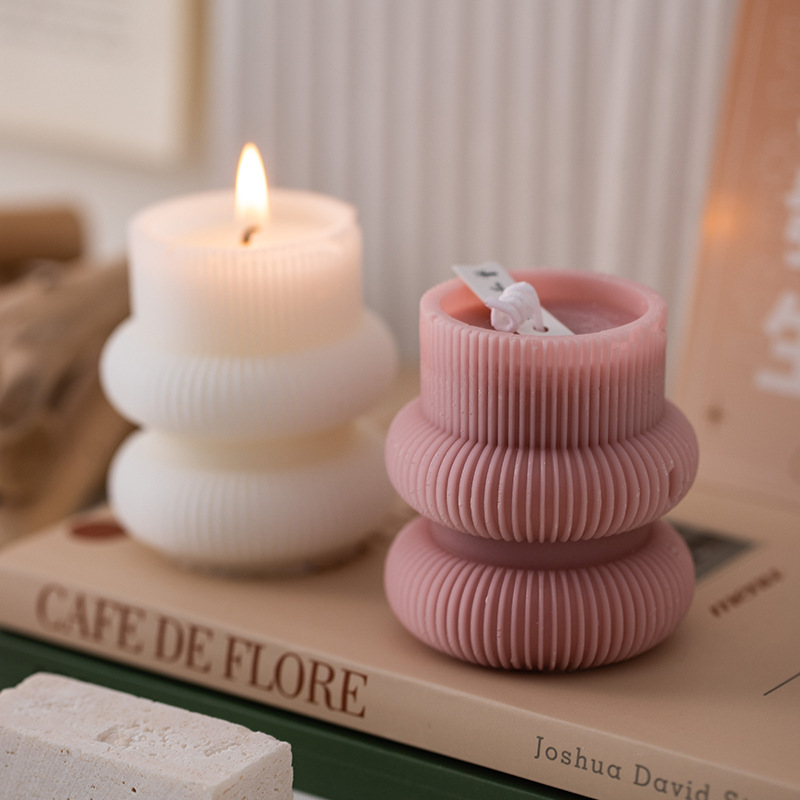
Erin jerked her hand back. The spilled wax hadn’t solidified on the marble tray; instead, as if alive, it was slowly and silently “seeping” into the tray’s texture. Even more eerie was that, although the pink “gourd”-shaped candle was clearly unlit, the ring at its top was trembling slightly, as if something inside were melting and reforming.
The temperature in the room seemed to rise. Erin felt a wave of dizziness as she stared at the “U”-shaped candle; its once-hard white wax had now become as soft as skin. The flame was no longer orange-yellow but had turned into a deep, almost transparent blue.
“This isn’t scientific,” she muttered to herself, trying to build a defense with her rational mind.
But just then, she looked at her own hand.
Bathed in the candlelight, the edges of her fingers resting on her knees began to blur. It wasn’t a blurring of her vision, but a physical “softening.” Her fingertips were like butter baked by intense heat, losing their distinct contours and blending into the dust particles in the air.
Fear seized her in an instant, but it was followed by a strange sense of calm.
She had always believed herself to be an observer of this world—the one holding the ruler and compass, defining shapes. She had lived her life as an exquisite geometric candle, refusing to melt, refusing to flow, refusing any irrational entanglement with this chaotic world.
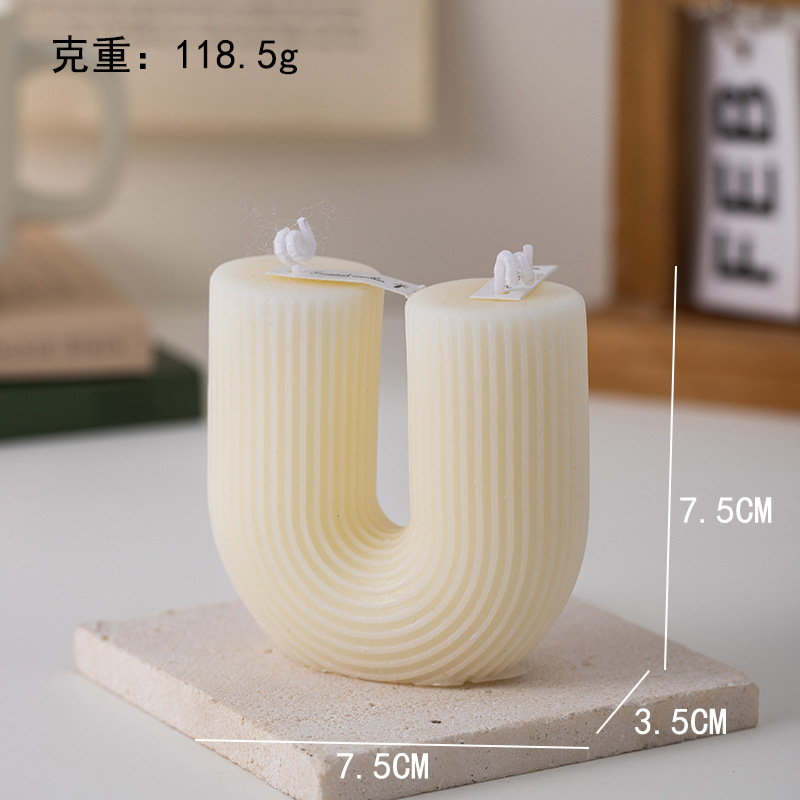
But that “U”-shaped candle told her: all shapes are merely temporary solid states.
So-called “boundaries” exist only because the temperature hasn’t risen high enough. When heat accumulates to a certain point, even the hardest edges will yield, and even the clearest distinctions between “you” and “me” will blend together. She had always feared losing control, feared ceasing to be herself—but in truth, that state of “not being herself” was the truest freedom of matter.
Erin stopped struggling. She watched as the tips of her fingers regained their clarity, yet something hard within her heart had changed forever.
The rain had stopped.
The “U”-shaped candle continued to burn quietly, its wax pool as smooth as a mirror, as if everything that had just happened were merely an illusion. But Erin knew it wasn’t. She stood up, but instead of blowing out the candle, she walked to the window and pushed it open.
The damp night breeze swept in, carrying the scent of earth and leaves. She didn’t close the window, nor did she smooth her hair, which had been tousled by the wind. She simply stood there, feeling as though she were a candle that had just been lit—still retaining her human form, yet with a grand, irreversible melting already underway within her.