

The doorbell rang at exactly 7:03 a.m., which was strange, because Emma had not ordered anything.
She padded downstairs in her socks, coffee already halfway to her lips, and opened the front door to find a small brown box on the porch. No return address. No logo. Just her name, written in black marker: Emma Cole.
The morning air smelled like rain. Her birthday was today—thirty-two, though she had stopped announcing it out loud after thirty. She had planned a quiet day: work from home, eat leftover cake for breakfast, maybe call her mom before dinner. Nothing more.
She picked up the box. It was lighter than it looked.
Back in the kitchen, she set it on the counter and stared at it for a long moment. The tape was smooth and new. The label had no tracking number, no postage, no carrier name. Only the delivery time had been stamped neatly in the corner:
Delivered: August 10, 2026 — 7:03 a.m.
Emma glanced at the microwave clock.
7:04 a.m.
She laughed once, softly, because that was the only reasonable response. Then she cut the tape with a butter knife.
Inside was a folded gray scarf, a small glass jar of peppermint tea, and a white envelope.
The scarf smelled faintly of cedar and smoke. Emma lifted it to her nose before she could stop herself. It smelled like her father’s old coat, the one he used to wear when he walked her to the bus stop on cold mornings. Her throat tightened.
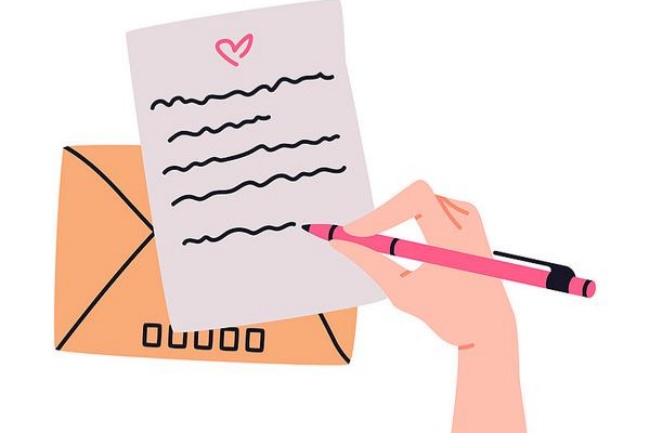
The envelope had no stamp. Her name was written across the front in handwriting she almost recognized.
Almost.
She opened it.
Emma,
If you’re reading this, the package arrived on time. I’m sorry I couldn’t send more. There are rules.
Your dad is going to call you at 9:17 tonight. He’ll sound tired. He’ll say he forgot your birthday again, and he’ll try to make a joke about it. Don’t let him rush off the phone.
Ask him about the lake house. Ask him about the summer you were nine and you lost his fishing hat in the water. He’ll laugh. You’ll laugh too.
Don’t mention the package. Don’t tell him where you got it. Just listen.
And Emma—wear the scarf tomorrow. Not today. Tomorrow.
You’ll understand later.
—E.C.
Emma read it twice. Then a third time.
The handwriting was hers.
Not similar. Not close. Hers. The same small loop on the capital L, the same habit of letting the last letter in a word trail off like it had run out of patience.
She sat down at the kitchen table, the note trembling slightly in her hand.
“Okay,” she said to the empty room. “Okay.”
The rational part of her brain offered explanations. A prank. A very committed friend. A strange promotional campaign. Someone who had copied her handwriting well enough to fool her on a bad morning.
But the scarf.
The scarf made no sense.
At 9:17 p.m., her phone rang.
Emma had spent the whole day watching the clock, pretending she had not. She answered on the first ring.
“Dad?”
“Happy birthday, bug,” he said. His voice was warm and rough, the way it always sounded when he was tired. “I know, I know. I’m the worst father in the western hemisphere.”
Emma closed her eyes.
It had happened exactly as the letter said.
“I’m not the worst,” he continued. “Just top five.”
She laughed before she could help it. “You’re definitely top five.”
There was a pause. Then he said, “How’s work?”
Emma looked at the note on the table.
“Tell me about the lake house,” she said.
Another pause. “The lake house?”
“The summer I was nine. You let me borrow your fishing hat, and I dropped it in the water, and you pretended to be furious for like ten minutes.”
Her father went quiet. Then he laughed, low and surprised. “You remembered that?”
“Of course I remembered.”
“I was not furious,” he said. “I was devastated. That hat had seen things.”
Emma smiled until her eyes stung.
They talked for forty-seven minutes. He told her about the dock they had rebuilt, the raccoon that used to steal their snacks, the way the water looked silver before sunrise. He told her things she had forgotten, and some she had never known. He did not mention illness. He did not mention anything heavy. He only gave her small, bright pieces of the past, like handing her stones from a riverbed.
When they finally said goodbye, he added, “I love you, Em.”
“I love you too, Dad.”
She set the phone down and sat in the quiet kitchen.
The note had not predicted the future. Not exactly. It had not warned her of danger or promised her riches or revealed some impossible truth. It had only reminded her to answer the phone with her whole heart.
The next morning, Emma woke early.
The sky was pale blue, and the air had turned crisp, the kind of morning that makes you want to walk farther than you planned. She folded the gray scarf and tucked it around her neck.
It smelled like cedar.
It smelled like memory.
Outside, the neighborhood was still waking up. A dog barked somewhere down the street. Leaves shifted in the breeze. Everything looked ordinary, and yet, as Emma stepped onto the sidewalk, she had the strange feeling that the day had been waiting for her.
She did not know who had sent the package.
She did not know if she would ever understand.
But she walked forward anyway, the scarf warm against her throat, thinking that maybe some gifts are not meant to change your life all at once—only to remind you, quietly, to hold on a little tighter before the moment passes.