
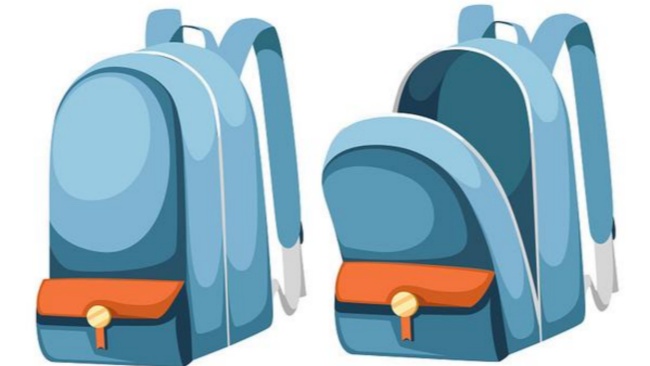

The meter read $14.20 when James noticed the backpack.
It sat in the backseat like it had always belonged there — navy blue, canvas, one strap hanging loose over the edge. His passenger, a woman in a gray raincoat, had paid in cash, folded the receipt into her pocket without looking at it, and disappeared into the crowd outside Union Station.
James picked it up. It was heavier than it looked.
He unzipped the front pocket first. A phone charger. A granola bar, half-eaten. A library card with the name Emily Rourke printed in small black letters.
He checked the main compartment.
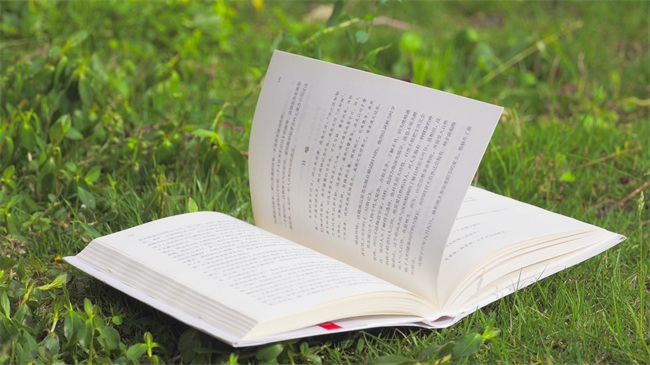
A notebook. That was all. Black cover, no markings. He flipped it open.
The first page was blank. The second was blank. The third had a single line, written in neat pencil:
He always parks on the north side.
James stared at it. He turned the page.
He always checks the mirror before he opens the door.
He turned another page.
He never looks at the backseat.
A cold feeling moved through his chest, slow and deliberate, like someone dragging a fingertip down his spine.
He glanced at the rearview mirror. The backseat was empty. Of course it was. But for a second — just a fraction of a second — he thought he saw the shadow of a shoulder where no one was sitting.
He closed the notebook.
The next fare was a college kid heading to the university. James drove normally. He followed the GPS. He made small talk. But every time the car stopped at a red light, his eyes drifted to the mirror.
Nothing.
When the kid got out, James pulled over and opened the notebook again.
He always parks on the north side.He always checks the mirror before he opens the door.He never looks at the backseat.But tonight, he will.
James stopped breathing.
That entry hadn’t been there before. He was sure of it. He had flipped through every page. The last written line had been the third one.
His hands tightened on the wheel.
He told himself it was a prank. Some college kid with too much time and a dark sense of humor. He almost laughed at how easily he’d scared himself.
Almost.
He drove home the long way, through streets he didn’t usually take. He parked in his usual spot — the north side of the lot, under the flickering light near Building C. He’d parked there every night for six years.
He killed the engine.
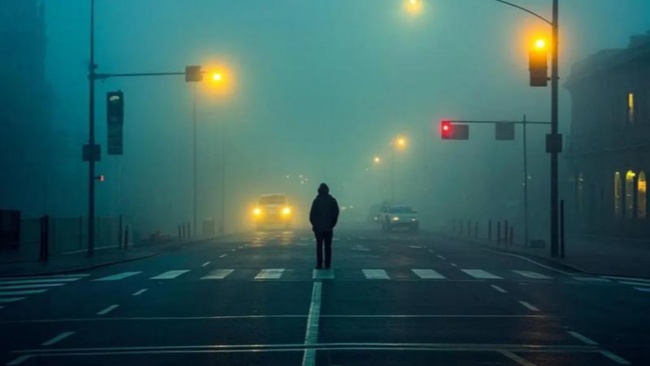
The parking lot was empty. The kind of empty that makes ordinary silence feel like it’s waiting for something.
James sat there for a long time, watching his own reflection in the rearview mirror. Tired eyes. A face he barely recognized anymore. He thought about the woman in the gray raincoat — how she hadn’t looked at him once, not when she got in, not when she got out. How she’d folded the receipt like she was hiding something.
He reached for the notebook.
There was a new line.
He always parks on the north side.He always checks the mirror before he opens the door.He never looks at the backseat.But tonight, he will.And he will see that the backseat was never empty.
James’s blood went still.
He didn’t want to look. Every instinct he had screamed at him to open the door, run, never come back to this car. But his eyes moved to the mirror anyway.
The backseat was empty.
He let out a breath he didn’t know he was holding. Just a notebook. Just words. Just his own mind playing tricks after a long shift.
He laughed — short, nervous, relieved — and reached for the door handle.
Then he noticed something.
The backpack was gone.
He had left it on the passenger seat. He was certain. He had placed it there himself after the last fare.
He looked down. The seat was bare.
He looked in the mirror.
The backseat was still empty.
But in the corner of the mirror, just at the edge of the frame, something moved — a slow shift of fabric, like someone settling into a seat they’d been waiting in all along.
James didn’t turn around.
He sat very still, listening to the engine tick as it cooled, listening to the silence press against the windows. And somewhere behind him, so faint he might have imagined it, he heard the soft click of a seatbelt fastening.
Some things we leave behind aren’t objects at all. And some things that find their way into our lives don’t arrive by accident — they arrive because we stopped paying attention long enough for them to settle in.