

James noticed him on a Tuesday.
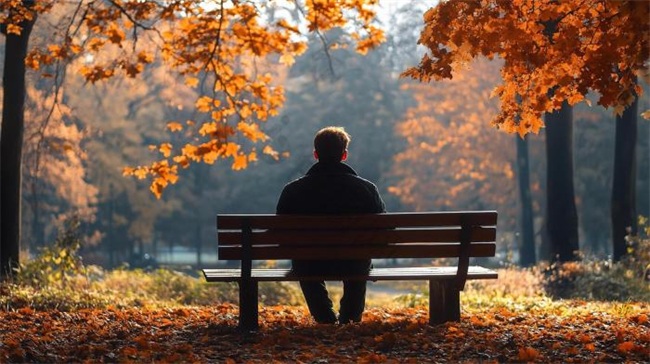
The man was sitting on the wooden bench outside the pharmacy, the kind with peeling green paint and a backrest that leaned slightly to the left. He wore a dark coat that looked too heavy for September, and his hands were folded in his lap like he was waiting for a bus that had already come and gone.
James had passed the bench a hundred times before. He’d walked past it on his way to work, on his way home, on evenings when he stopped for coffee and pretended he had somewhere to be. But that Tuesday, something made him look twice.
The man wasn’t moving.
Not in the way people usually sit outside. He wasn’t checking his phone. He wasn’t reading. He wasn’t smoking, scrolling, tapping his foot, or glancing up at the street. He was just there, still as a photograph, staring at the second-floor window of the building across from him.
James slowed without meaning to.
The window above belonged to a small apartment. A pale yellow curtain hung behind the glass, slightly open. From the street, you could see the edge of a kitchen table, a mug, and the corner of a framed picture. Nothing unusual. Nothing that explained why someone would sit beneath it all night.
By Wednesday morning, the man was still there.
James told himself it wasn’t his business. He was a high school history teacher, not a detective. He had papers to grade, a cold classroom to prepare for, and a habit of avoiding anything that might complicate his quiet life.
But when he walked past at lunch, the man hadn’t moved.
A woman from the bakery brought him a paper cup of coffee. He took it with a small nod, thanked her in a voice so low James almost missed it, and returned his attention to the window.
That night, James couldn’t sleep.
He kept thinking about the yellow curtain. About the mug. About the way the man’s coat had settled around his shoulders, as if he had been wearing it for years.
On Thursday, James stopped pretending.
He bought two coffees from the bakery and sat on the far end of the bench. The man didn’t look at him at first. The street moved around them: a delivery truck, a dog walker, a teenager laughing into her phone.
“You’ve been here a while,” James said.
The man’s eyes stayed on the window. “I have.”
James set one of the coffees between them. “You want this?”
For a long moment, nothing happened. Then the man reached for it, careful, like he wasn’t used to being offered things.
“Thank you,” he said.
James waited.
The man’s name was Daniel. He said it quietly, as if he hadn’t used it in days. He told James that the woman in the apartment was his mother. She had moved there two years ago after his father died. They hadn’t spoken much since. Nothing dramatic. Just the slow, ordinary way people drift apart.
“She used to keep the kitchen light on for me,” Daniel said. “Even when I was late. Even when I said I wouldn’t come.”
James looked up at the window. The curtain hadn’t moved.
“She passed last week,” Daniel said. “Heart attack. Alone.”
The words landed softly, but they changed the air between them.
James didn’t know what to say. He thought about apologies, about distance, about all the years he had told himself there would be more time. He thought about his own father, who had called every Sunday until James stopped returning the calls because he was “too busy.”
“I came here,” Daniel said, “because I didn’t know where else to put it.”
James understood then. The bench wasn’t a place. It was the only shape his grief had left.
They sat there until the coffee went cold. James didn’t ask Daniel to move on. He didn’t tell him it would get easier, because he didn’t know if that was true, and because some truths shouldn’t be rushed into comfort.
When James finally stood, Daniel looked at him for the first time.
“Why did you sit down?” he asked.
James almost gave a polite answer. Something about concern, or curiosity, or being a good neighbor. But the morning light was thin and honest, and he didn’t want to lie.
“Because I’ve been looking at windows too,” he said. “Just different ones.”
Daniel nodded slowly.
The next morning, the bench was empty.
James almost felt relieved, then almost felt guilty for it. The yellow curtain above was still slightly open. The mug was gone from the table. Someone had placed a small potted plant on the windowsill, bright against the pale glass.
He walked to school with his hands in his pockets, the autumn air sharper than it had been the week before. Halfway there, he stopped and pulled out his phone.
His father’s name was still in his contacts, right where it had been for months, untouched.
James stared at it longer than he needed to. Then he pressed call.
It rang three times before voicemail.
He almost hung up.
Instead, he left a message.
“Dad,” he said. “It’s me. I’m sorry it’s been so long. I’d like to see you this weekend, if you’re free.”
The street was quiet when he finished. A few leaves slid across the sidewalk. Somewhere behind him, a bus door opened and closed.
James put the phone away and kept walking.
Nothing had been fixed. No old wound had magically closed. But as he turned the corner, he noticed the sky was wider than he remembered, and for the first time in a long while, he didn’t feel like he was only passing through his own life.