

The subway train sped through the tunnel, emitting a monotonous rumble. Leo leaned against the door, swaying gently with the car’s motion. He clutched a freshly printed medical exam report in his hand; the edges of the paper had already softened slightly from sweat.
These were the results of his company’s annual physical. Leo, thirty-two years old, worked as a regional dispatcher for a multinational logistics company. His daily routine consisted of staring at screens filled with dense cargo data, ensuring that containers arrived on time in every corner of the world.
He took a deep breath and turned to the third page of the report.
Blood pressure: Normal. Blood sugar: Normal. Liver function: Normal.
Leo breathed a sigh of relief, but his gaze was immediately drawn to a line of data further down the page.
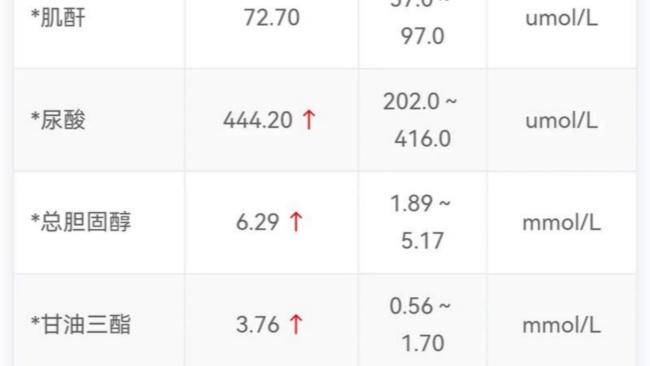
“Homocysteine (HCY): 18.5 μmol/L (Reference range: 0–15)”
Next to it was a conspicuous red upward arrow.
Leo furrowed his brow. He had no idea what this indicator meant. He pulled out his phone and typed the complex string of letters into a search engine. The screen refreshed, and the very first search result read: “Hyperhomocysteinemia is an independent risk factor for cardiovascular disease, stroke, and certain cancers.”
The air in the train car seemed to grow thin in an instant. Leo felt his heart contract sharply. He instinctively touched his left chest, where he could feel an inexplicable flutter.
“Independent risk factor,” he repeated the words silently to himself.
He recalled those three nights last week when he’d worked overtime straight through to meet an urgent shipment to Europe. He’d downed six cups of espresso, and his heart had been pounding just like this. At the time, he’d thought it was just fatigue, but now he was certain it was his body’s warning signal.
The subway pulled into the station, and Leo followed the flow of people out onto the platform. He walked quickly, his mind consumed by that red arrow. It was like a sharp red sword hanging over his head.
Back at his apartment, Leo didn’t turn on the TV as he usually did, nor did he order that high-calorie pizza. Instead, he dug out the first-aid kit and found a box of B-complex vitamins he’d bought a long time ago. The instructions read: “Helps lower homocysteine levels.”
He swallowed two tablets and poured himself a large glass of warm water.
Over the next few days, subtle changes began to take place in Leo’s life.
He started turning down his colleagues’ invitations for late-night snacks, explaining that he was “taking care of his health lately.” He placed a large water pitcher on his desk and forced himself to drink water once every hour. He even bought a blood pressure monitor and checked his blood pressure once in the morning and once at night.
That red arrow became the guiding force in his life.
Two weeks later, Leo went to the hospital for a follow-up checkup.
The waiting area was packed with people, mostly middle-aged and elderly. Leo blended in among them, looking particularly young—and particularly anxious. As he watched the numbers flash on the call-up screen, he felt like a prisoner awaiting sentencing.
“Leo.”
The nurse called his name.
Blood draw, then wait.
Half an hour later, Leo received his new test results. His hands trembling slightly, he flipped straight to the third page.
“Homocysteine (HCY): 12.1 μmol/L”
No arrow. The value was within the normal range.
Leo let out a long sigh and slumped back into his chair. The exhaustion that comes after narrowly escaping disaster almost made him laugh. He was fine; he’d dodged a bullet.
He walked out of the hospital with the report in hand; the sunlight outside was a bit blinding. He took out his phone, intending to call his mom to let her know he was okay and to mention that he’d recently started taking vitamins.
Just then, his gaze inadvertently swept across the very bottom of the report. There was a line of extremely small print—a note he had never noticed before.
“Note: This laboratory uses the cyclic enzyme method for homocysteine testing. Reference ranges may vary slightly due to reagent batches and individual metabolic differences. An elevated result from a single test does not directly indicate a clinical disease; a comprehensive clinical evaluation is recommended.”
Leo froze.
He stood on the bustling street, staring at the small print.
“Does not directly equate to a clinical disease.”
He suddenly recalled how, over the past two weeks, a single arrow had caused him to change his diet, his sleep patterns, and even the way he viewed the world. He had turned down social engagements, stopped staying up late, and begun paying attention to physical details he had never cared about before.
Perhaps that arrow wasn’t pointing toward death, but toward some forgotten way of life.
Leo put the report away, folded it neatly, and slipped it into his shirt pocket. He looked up and noticed the sky was an almost unreal shade of blue.
He decided not to work overtime tonight. Instead, he’d go to the supermarket to buy some fresh vegetables and cook himself a proper dinner.
That upward-pointing arrow was still etched in his mind, but he no longer saw it as a sharp sword. It was more like a road sign, pointing toward the path to himself—a path he had long overlooked.